 View notices
When the money runs out: inside LIV Golf's funding cliff crisis
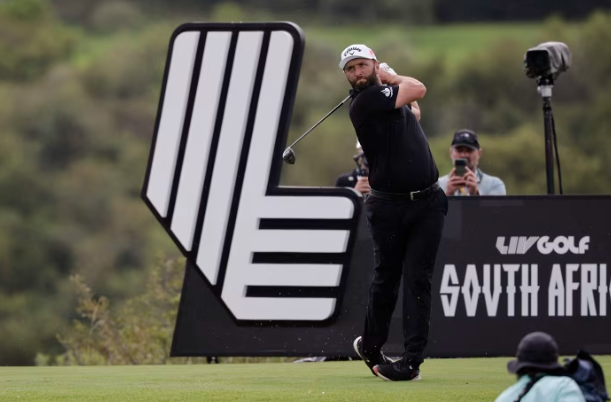
LIV Golf is cutting the majority of its workforce, with termination notices going out this week and most staff departures scheduled for the first week of September 2026, as the Saudi-backed league confronts the funding cliff that has loomed over it for months. Talks remain ongoing to secure the league's long-term future.
Saudi Arabia's Public Investment Fund (PIF) told LIV in April 2026 that it would fund the league only through the end of the 2026 season, bringing an end to a multi-year financial commitment that has totalled more than $5 billion since LIV's launch in 2022.
LIV has confirmed it is being forced to reduce staffing levels regardless of whether it can finalise any transactions to secure the league's continuation. The league informed “the majority of its workforce” this week that their employment under what is being termed “LIV 1.0” will conclude early next month, having already warned staff of potential redundancies back in July.
A LIV spokesperson told Sky Sports that the funding commitment announced by PIF earlier in the year would reach its conclusion, and that the league was scaling back operations as it transitioned toward “the next chapter of LIV Golf” and worked to make “LIV 2.0” a reality. The spokesperson confirmed that many colleagues had been informed this week that their employment under LIV 1.0 would end in the first week of September.
No final decision has been made on the staffing levels required for any future version of the league. LIV – previously home to more than 300 staff globally – says it remains hopeful that some employees could return should a new iteration of the league materialise.
The league is now scrambling to secure fresh investment – reportedly in the region of $250 million to $350 million – in an attempt to continue in some form as “LIV 2.0”. In the meantime, it has already begun cutting events and prize purses, and is facing lawsuits from vendors over unpaid bills. LIV chief executive Scott O'Neil has struck an optimistic tone over the league's future, while acknowledging what he described as a compressed timeline created by the funding situation.
Was LIV warned this was coming?
The collapse has reignited debate over whether the league's structural risks were flagged from the outset – and the picture is more nuanced than a simple yes or no.
From 2022 onward, PGA Tour officials, industry analysts and media repeatedly questioned LIV's long-term sustainability, pointing to its dependence on a single sovereign-wealth backer, the scale of its guaranteed player contracts, and a path to profitability that LIV's own chief executive later admitted could take five to ten years.
LIV's leadership, for its part, consistently pushed back on suggestions the league was at risk of collapse. At various points, players and staff were reportedly told that funding had been secured well beyond 2026, with some reports citing commitments extending as far as 2032. As recently as April 2026, LIV's chief executive said the season would run “as” – even as PIF was preparing to withdraw future funding.
In short, the broader structural risk – reliance on a single backer and a long runway to profitability – was widely flagged by critics from the beginning. What was not known until April 2026 was the specific timing of the funding cutoff, which has now triggered the league's current downsizing.
Why this matters for the PGA Tour rivalry
LIV's arrival in 2022 forced the PGA Tour onto the defensive, prompting player suspensions, protracted legal battles and, eventually, a framework agreement with PIF aimed at ending the sport's civil war.
With PIF now stepping back, LIV's leverage as a deep-pocketed rival appears to have collapsed, shifting the balance of power back toward the PGA Tour – though the Tour is not without its own commercial challenges, including fallout from its SSG investment deal reported in August 2026.
Amid the uncertainty, PGA Tour star Rory McIlroy has warned of a “tough road back” for LIV players eyeing a potential return to the PGA Tour, questioning the value they would offer the Tour given the circumstances of their departure.
SOURCES: The New York Times, Reuters, BBC, Yahoo Sports, Sky Sports.