 View notices
SA develops its own answer to cricket’s pitch problem
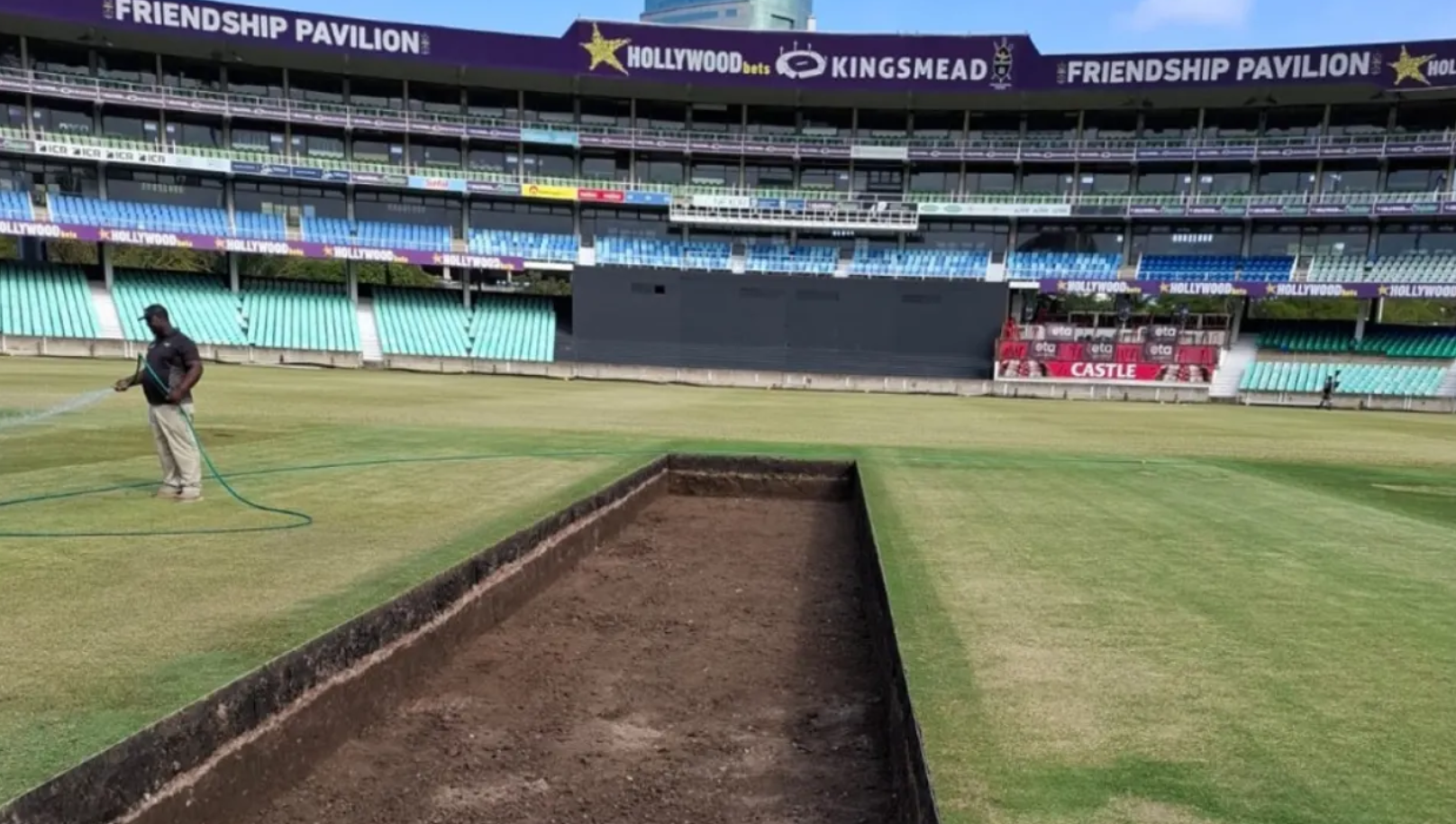
South Africa is preparing for an increasingly crowded international and domestic cricket calendar by introducing an exchangeable pitch system designed to reduce pressure on the country’s busiest grounds.
The system is being developed as Cricket South Africa (CSA) faces a season featuring 78 days of men’s and women’s international cricket, alongside expanded domestic competition and the 71-match provincial T20 tournament and SA20.
Firdose Moonda reports for Cricinfo that the workload has raised concerns about pitches ageing, slowing down or behaving inconsistently.
Rather than adopting Australia’s conventional drop-in pitch model, South Africa is developing a system in which pitches can be grown and prepared away from the playing square before being moved into position when required.
The pitches are constructed using the same bulli soil and grass varieties traditionally used at each venue. They are grown in steel trays on the outfield, allowing grounds staff to control conditions without interfering with neighbouring turf.
CSA pitch consultant Hilbert Smit said the approach was necessary because South African venues could not afford to take existing pitches out of service for an extended period. Six SA20 venues – the Wanderers, Kingsmead, Newlands, St George’s Park, Boland Park and SuperSport Park – have agreed to participate.
The Wanderers is furthest advanced. Its exchangeable pitch was planted in 2024 and was used in a professional match in March, when the Lions beat the Dolphins. Captains and match officials rated the surface 7.5 out of 10.
The technology is intended primarily for white-ball cricket at this stage. None of the exchangeable pitches is currently earmarked for Test matches.
The Wanderers could become the first venue to use one in the SA20, while Newlands is expected to stage a match on its exchangeable surface before Christmas.
The process from planting a pitch to making it ready for use takes at least 12 to 18 months, with CSA keen to avoid repeating problems associated with hastily prepared pitches at the 2024 T20 World Cup in New York.
Moving the pitches has also required a specifically South African solution. Each surface weighs about 32 tonnes but can be transported using an air-cushion system that reduces the effective load substantially.
Ground staff initially took 11 days to install the first exchangeable pitch at the Wanderers. That process has since been reduced to less than a day.
Once installed, a pitch requires five to six days on the square before it can be used. It can then provide several days of high-level cricket before being replaced by another surface that has been prepared and rehabilitated off the square.
The system is intended to allow grounds to increase their utilisation while giving players fresher surfaces throughout a demanding season.
CSA’s approach has been influenced by international experience, including the problems encountered in New York, while developing a system adapted specifically to South African venues.