 View notices
The Viking king behind your Bluetooth connection
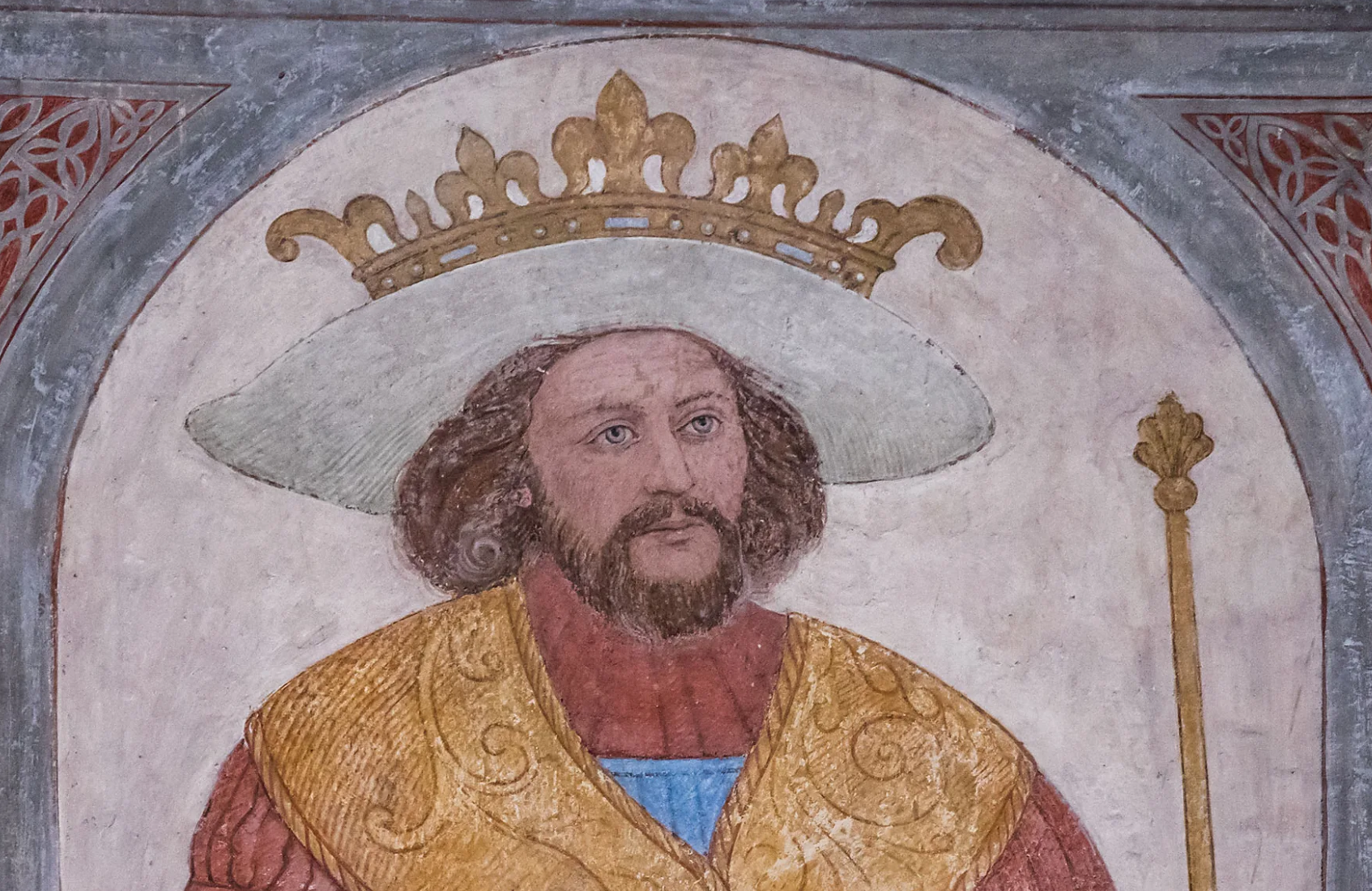
The name on billions of wireless devices has its origins not in modern technology but in a Danish king who ruled more than a millennium ago.
Harald Gormsson, the 10th-century ruler better known by the nickname Bluetooth, helped consolidate Denmark and played a major role in its conversion to Christianity.
Lindsey Galloway reports for the BBC that the story is preserved at Jelling, a small Danish town where two ancient runestones record key moments in the development of the Danish state.
Harald’s nickname, Blátǫnn in Old Norse, was recorded roughly 150 years after his death and is generally thought to refer to a discoloured or damaged tooth.
The larger Jelling stone, commissioned by Harald, declares that he had brought Denmark and Norway under his rule and converted the Danes to Christianity. It also contains one of Scandinavia’s earliest depictions of Christ.
Harald’s adoption of Christianity was not simply a religious development. It also helped him strengthen links with Christian Europe and consolidate political authority.
Jelling had already been an important centre under Harald’s father, Gorm. The older runestone commissioned by Gorm in memory of his wife, Thyra, is believed to contain the earliest written reference to Denmark within the country.
The site subsequently became a meeting point between older pagan traditions and the emerging Christian order.
Today, the Jelling monuments include burial mounds, a church and the runestones, with markers outlining the enormous enclosure that once surrounded the site.
The complex was designated Denmark’s first UNESCO World Heritage site in 1994.
The connection with modern technology emerged in the late 1990s, when engineers from companies including IBM, Intel, Nokia, Ericsson and Toshiba were developing a wireless standard intended to allow devices made by different companies to communicate.
Intel engineer Jim Kardach became interested in Harald Bluetooth while working with Swedish engineers and reading about Viking history.
The king’s role in bringing territories and people together provided a fitting metaphor for technology designed to connect otherwise separate devices.
“Bluetooth” was initially only a codename, but it leaked before the technology’s formal launch and ultimately survived as its permanent name. The technology’s distinctive logo also carries the Viking connection. It combines the Norse runes representing Harald’s initials, H and B.
When Bluetooth celebrated its 25th anniversary in 2023, Kardach and other technology pioneers visited Jelling and jokingly apologised for borrowing Harald’s name.
The museum accepted the apology – and gave them permission to continue using the name for another 1,000 years.