 View notices
Sea cucumber tissue defies death for more than three years
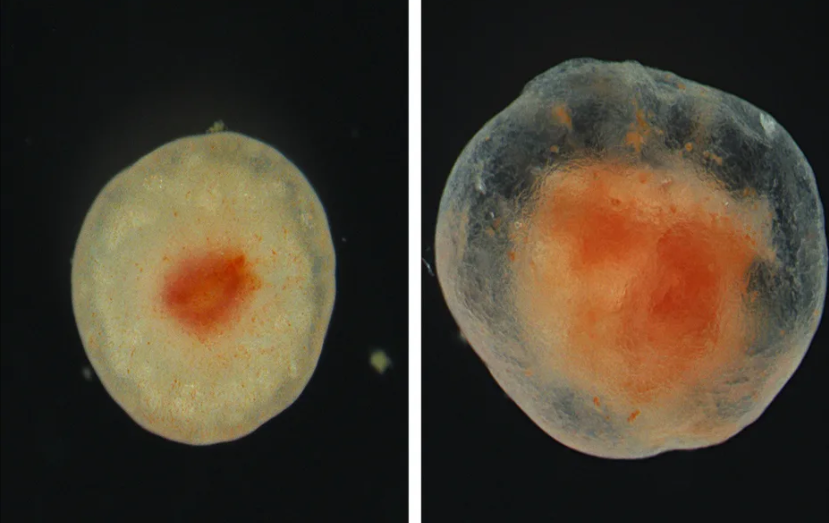
Scientists have discovered that detached sea cucumber tissue can survive, grow and reorganise itself for more than three years without being connected to the animal from which it was removed, potentially opening new avenues for research into tissue regeneration and healing.
The extraordinary discovery has prompted comparisons with Thing, the disembodied hand from The Addams Family, and descriptions of the sea cucumber as a “real-life zombie”.
Weeks after being removed from a tube foot, a fragment of tissue continued growing in seawater containing large numbers of microbes, despite lacking the sterile conditions normally required to sustain tissue cultures, SciTechDaily reports.
Researchers at Memorial University of Newfoundland subsequently placed tissue removed from the feet, bodies and tentacles of three sea cucumbers into flowing seawater.
The animals belonged to Psolus fabricii, a cold-water sea cucumber species.
Working with collaborators including Rachel Sipler, a senior research scientist at Bigelow Laboratory for Ocean Sciences, the team documented the behaviour of the detached fragments in a study published in Science Advances.
The fragments, known as explants, retained their structure, moved independently and showed evidence of immune activity and tissue reorganisation.
Remarkably, the tissue remained active more than three years after removal, when researchers ended the experiments to prepare their findings for publication.
Surviving without a mouth
One of the most intriguing aspects of the discovery is how the fragments survived without a mouth or conventional digestive system.
Researchers believe the tissue absorbed amino acids directly from seawater, providing nutrients needed to maintain and build proteins.
Sipler said natural seawater contained an enormous diversity of microbes and organic matter, which appeared to support the tissue’s survival and growth.
Unlike conventional tissue cultures, which generally require carefully controlled and sterile environments, the sea cucumber fragments thrived in water containing bacteria and other microorganisms.
The researchers believe this is the first known demonstration of discarded tissue surviving and growing over an extended period outside tightly controlled laboratory conditions.
Sea cucumbers belong to the echinoderm family, which includes starfish and sea urchins.
Many echinoderms can regenerate lost body parts, while some display remarkably little cellular ageing.
However, scientists had generally expected tissue completely separated from the original animal to eventually die.
Although the fragments continued growing and diversifying, the researchers have not succeeded in growing a complete sea cucumber from detached tissue.
Sipler compared the discovery with a lizard regenerating its tail, but suggested the sea cucumber findings raised the more extraordinary question of whether a detached part might eventually regenerate an entire animal.
Potential medical applications
The discovery could provide biomedical researchers with a new model for studying tissue repair, regeneration and antimicrobial healing.
Andrea Bodnar, science director at the Gloucester Marine Genomics Institute, who was not involved in the study, said the findings highlighted the unexpected biological capabilities found in marine organisms.
The ability of detached tissue to survive for years in natural seawater suggested a new model for investigating biological resilience and regeneration.
Researchers also believe sea cucumber tissue could offer laboratories a more accessible alternative to some conventional cell cultures.
Because sea cucumbers are invertebrates, their tissue is subject to fewer research restrictions than human or other vertebrate cell lines.
This could make the approach particularly useful for institutions with limited laboratory infrastructure or regulatory constraints.
Sipler said the discovery demonstrated the importance of careful scientific observation and the enormous amount still to be learned from marine ecosystems.
The research also strengthens the argument for protecting marine biodiversity, which may contain biological mechanisms with valuable future scientific and medical applications.
Sources: SciTechDaily; Science Advances; Memorial University of Newfoundland; Bigelow Laboratory for Ocean Sciences.