 View notices
Nobel Prize honours breakthrough that allows scientists to control brain cells with light
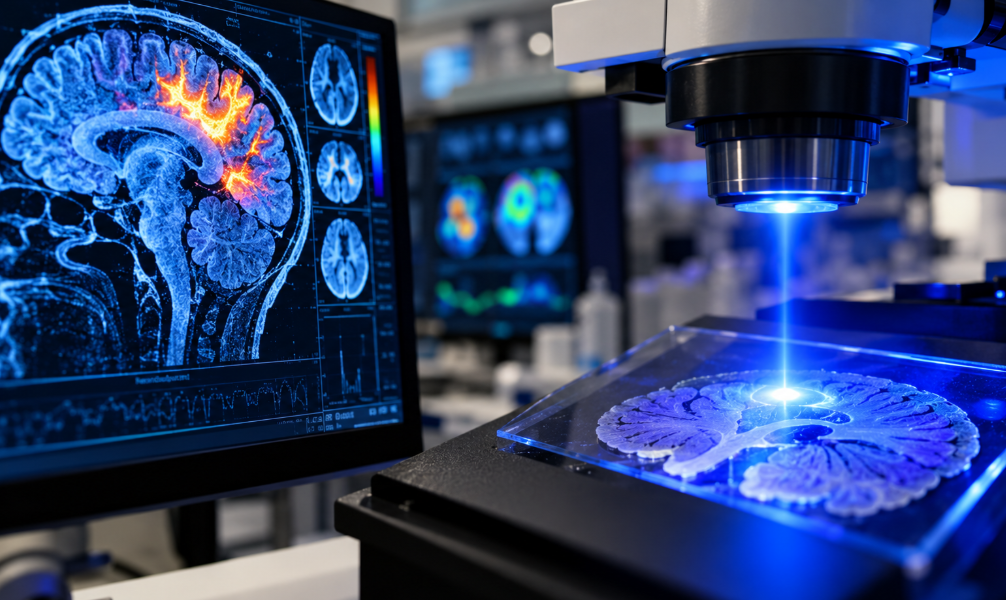
Three scientists have been awarded the 2026 Nobel Prize in Physiology or Medicine for pioneering a technique that allows researchers to activate or deactivate individual nerve cells using light.
Karl Deisseroth of Stanford University shares the award with Peter Hegemann of Humboldt University in Berlin and Georg Nagel of the University of Würzburg, Germany, Nature reported.
The technique, known as optogenetics, has transformed neuroscience by allowing scientists to investigate how specific brain cells influence behaviour, emotions and neurological disorders.
According to Stanford University and scientific journal Nature, the research has opened new possibilities for understanding conditions such as Parkinson’s disease, depression and other disorders affecting the nervous system.
Optogenetics works by introducing light-sensitive proteins into selected nerve cells. Researchers can then use carefully controlled light to influence the activity of those cells, allowing them to observe how particular neural circuits function.
The method has provided scientists with a degree of precision that was previously difficult to achieve when studying the brain.
Deisseroth played a leading role in adapting light-sensitive proteins, originally associated with microorganisms, for use in mammalian brain cells.
Stanford reports that the development has enabled researchers to investigate neural pathways involved in movement, behaviour and emotional responses.
The university said the discoveries had fundamentally changed how scientists study the brain and created opportunities for developing future treatments for neurological and psychiatric conditions.
Although the technology remains primarily a research tool, its ability to isolate and manipulate specific neural circuits represents a significant advance in understanding one of the human body’s most complex organs.
The Nobel recognition also highlights the growing importance of interdisciplinary research, combining biology, physics, genetics and engineering to address medical challenges.