 View notices
New underwater habitat brings first US subsea research station in 40 years
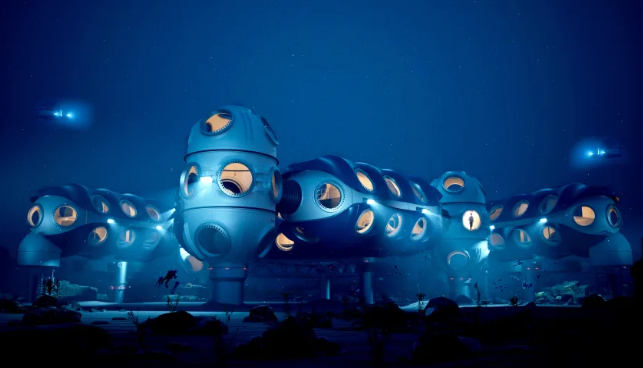
A new underwater research station off the Florida Keys marks the first subsea human habitat deployed in US waters in 40 years, CNN reports, ending a long stretch in which Aquarius Reef Base stood as the only operational underwater research laboratory in the world.
The new station, called Vanguard, was deployed in June on the seafloor of Tennessee Reef, 56 feet below the surface within the Florida Keys National Marine Sanctuary. Built by UK-based company DEEP, it can house four aquanauts on missions lasting five to seven days, in a living space measuring 35 feet by 8 feet.
Aquarius, by comparison, is somewhat larger and can accommodate six crew members for stays of more than 30 days.
Underwater habitats date back to the 1960s, when Jacques Cousteau's Conshelf project launched a wave of subsea research stations across the US, Europe, Russia and Japan, inspired by the same ambitions driving the space race. Most proved cramped, costly and short-lived, and the field lost momentum. Aquarius, built in 1986 and installed at its current site in 1993, remained the most recent US habitat until Vanguard's arrival.
Vanguard is connected to the surface via a buoy supplying fresh air, and includes waste-capture systems designed to limit its ecological footprint, storing grey water and human waste in external tanks before pumping it to the surface for treatment. The station is set to remain on the seafloor for five years near a reef known for its deepwater corals and sponges, an area that has suffered from rising temperatures and coral bleaching. Part of its scientific mission will involve identifying resilient coral and helping restore damaged reefs.
DEEP's director of scientific research, Dawn Kernagis, explained that living at depth through saturation diving allows scientists to spend far longer collecting data and samples than conventional scuba diving permits, since divers based at the habitat aren't constrained by tank limits or repeated decompression. She said the approach can compress what would normally take a month of conventional diving into less than a week, while also allowing samples to be analysed on-site rather than risking degradation during transport to the surface.
The first scientific team to occupy Vanguard has yet to be announced. The station is currently undergoing engineering and systems testing ahead of demonstration missions in October, with full missions beginning in November. Florida's government has committed just over $935,000 to fund six research teams from state universities, focused on coral restoration, monitoring, and human-machine collaboration underwater. Kernagis said DEEP also intends to involve artists and educators alongside scientists, building on prior outreach funding the company received from the US Office of Naval Research.
Mike Heithaus, a marine scientist and executive dean at Florida International University, which operates Aquarius, welcomed the new station, saying it could help build momentum around research questions important to the world's oceans. He noted Florida has continued investing in Aquarius as well, including a recent $5 million allocation, and suggested that companion studies at Tennessee Reef could offer a valuable opportunity for collaboration between the two habitats.
Unlike most historic subsea habitats, which relied on government or institutional funding, Vanguard was built by a private company; public records show Canadian businessman Robert MacGregor holds a controlling stake in DEEP. The company has outlined ambitious expansion plans, including a previously announced $100 million investment and new engineering and manufacturing facilities in Florida and Texas. It is already developing a larger successor habitat, Sentinel, designed to house six aquanauts at depths beyond 650 feet for month-long missions, with Kernagis describing a longer-term vision of a global network of subsea stations.
Heithaus said FIU is separately seeking funding for its own larger, more advanced habitat, and stressed that realising the full potential of a broader network of underwater stations will require strong collaboration across industry and institutions.
SOURCE LINK: https://edition.cnn.com/world/deep-vanguard-underwater-habitat-spc-c2e