 View notices
Missing ‘indigo’ light could prevent childhood short-sightedness
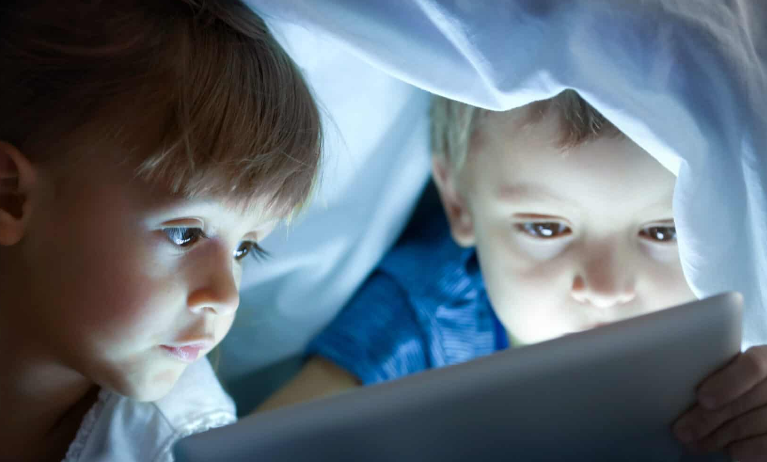
A wavelength of light largely absent from standard indoor lighting could hold a surprising key to reducing childhood myopia, according to new research from Cincinnati Children's and the University of Alabama at Birmingham (UAB), published on 18 August in Cell Reports Medicine.
Children who spend more time indoors looking at screens, and less time outside, are more likely to develop myopia, or nearsightedness – a condition growing rapidly worldwide, with some experts estimating that nearly five billion people, roughly half the global population, could be affected by 2050.
The research examined indigo light, a short wavelength abundant in natural sunlight but largely missing from standard white LEDs. In experiments on tree shrews, whose visual systems closely resemble those of humans, exposure to indigo light completely prevented the animals from developing nearsightedness.
Corresponding author Richard Lang, director of research in the Division of Ophthalmology at Cincinnati Children's, said the myopia model used in the study was fairly extreme, so indigo light's protective effect in these tests suggested it should prove effective in humans too.
Myopia develops when the eye grows too long from front to back, causing light to focus in front of the retina rather than on it, blurring distant vision. While glasses or contact lenses can correct this, severe myopia also raises the risk of more serious conditions later in life, including retinal detachment, glaucoma and macular degeneration.
Tree shrews were chosen for the study because their eyes share key anatomical and optical features with human eyes. First author Rafael Grytz of UAB used tiny spectacles to induce myopia in one eye of each animal, while the other served as a comparison. Earlier research in mice had suggested violet light near 380 nanometres could reduce myopia, but that wavelength proved ineffective in tree shrews, since their lenses – like human lenses – block most light below roughly 400 nanometres. This led researchers to slightly longer wavelengths, ultimately finding indigo light between 419 and 446 nanometres to be most effective at preventing myopia while still passing through the eye's lens.
The findings support the idea that modern indoor environments expose developing eyes to a different light spectrum than humans evolved under. Standard white LEDs typically peak around 450 nanometres, providing ample light for normal vision but relatively little indigo light – which appears to activate biological processes beyond image formation. Lang said humans evolved under the sun's full-spectrum light, and that indoor living deprives the eye of wavelengths needed for normal visual development.
Encouraging children to spend more time outdoors remains one option, though reversing society's broader shift toward indoor lifestyles may prove difficult. A second approach involves redesigning indoor lighting to better reproduce outdoor wavelengths – building on work such as Cincinnati Children's 2021 installation of a full-spectrum lighting system in its neonatal intensive care unit.
Researchers now plan to test indigo-enriched lighting in daycare settings, following children over time to compare myopia rates against those in centres with conventional lighting. Lang said the aim is not simply brighter indoor spaces, but artificial light that is more biologically complete, and that if future clinical studies confirm the findings, such lighting could become a safe, scalable way to help reduce childhood myopia risk.
Grytz and Lang are named as inventors on pending patents related to the research, and Grytz is founder and chief scientific officer of Electric Indigo, a UAB startup in which the university holds an ownership stake.
SOURCE: Science Daily