 View notices
Meteorite that crashed through New Jersey roof reveals ancient salty fluids
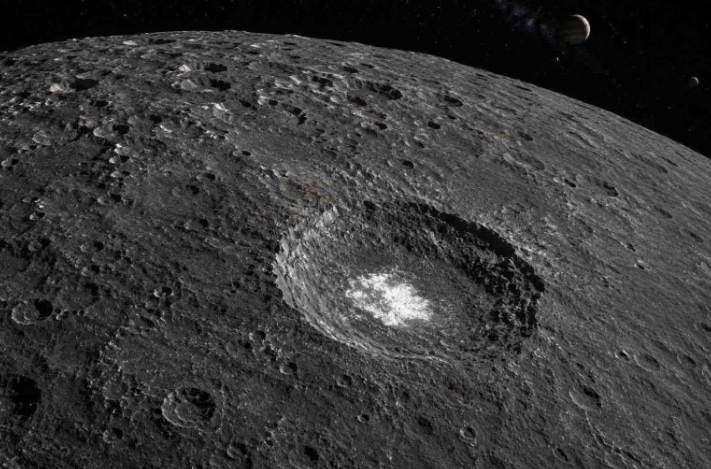
A meteorite that tore through the roof of a home in Hillsborough, New Jersey, contained evidence of ancient salty fluids and complex organic chemistry inside a primitive asteroid, according to an international team of researchers.
The meteorite arrived after a fireball crossed the New York City region on 16 July 2024. Travelling at about 32,000 miles per hour (14.4 kilometres per second), the object produced a sonic boom as it passed south of the Statue of Liberty before breaking apart approximately 22 miles (35 kilometres) above the ground, SciTechDaily reports.
Cameras in Connecticut, Pennsylvania and New Jersey helped scientists reconstruct the meteorite’s trajectory, which traced back to the lower asteroid belt. Doppler weather radar later detected a narrow debris field extending from Staten Island into New Jersey, with Hillsborough near its southern end.
Only one meteorite was recovered – after it crashed through a house. The homeowner reported hearing a loud bang before discovering a hole in the ceiling of the main bedroom. He also found black fragments and dust covering the bed, carpet and surrounding area, saying: “I smelled a strong sulfur-like odour.”
The fragments were collected using disposable gloves and aluminium foil, then sealed in glass jars.
This limited contamination from skin oils, dust and moisture, helping preserve what researchers described as some of the most pristine CM1/2 meteorite material yet identified.
The meteorite is a carbonaceous chondrite, a primitive class of space rock that preserves material from the early solar system.
It was classified as CM1/2, indicating that it had undergone more water-driven alteration than a typical CM2 meteorite, but less than a CM1 meteorite. Hillsborough is only the 22nd observed CM meteorite fall and the second witnessed fall of a CM1/2 carbonaceous chondrite.
The most significant discovery was found in tiny salt-rich fragments embedded in the meteorite.
Researchers believe these formed near the surface of the parent asteroid, where liquid water evaporated and left behind increasingly concentrated brines.
Similar evidence of salty fluids has been found in CI meteorites and samples returned from the asteroids Ryugu and Bennu, but the Hillsborough finding indicates that comparable chemistry also occurred in CM asteroids.
The meteorite contained 1.8% carbon and 0.07% nitrogen by weight, along with amino acids, carboxylic acids, organometallic compounds and other soluble organic molecules. These substances do not indicate that life existed on the asteroid, since they can form through non-biological chemical reactions. However, they show that primitive asteroids could produce and transport complex organic material.
Researchers say concentrated brines may have helped keep phosphate dissolved and brought minerals and organic compounds into contact, creating conditions favourable to prebiotic chemistry. The findings support the possibility that CM-type asteroids delivered some of the chemical ingredients needed for life on Earth, millions of years ago.
Several fragments will be preserved at the American Museum of Natural History in New York, allowing future researchers to study them with analytical techniques that have yet to be developed.
SOURCE: SciTechDaily
LINK: Meteorite That Smashed Through a New Jersey Roof Hid an Ancient Chemical Secret
CAPTION: Artist illustration (using ChatGPT) of a CM-type carbonaceous chondrite parent body asteroid with a near-surface brine deposit exposed in an impact crater.
PHOTO CREDIT: SETI Institute