 View notices
Korea’s trapped shark : is tech the problem – or the solution?
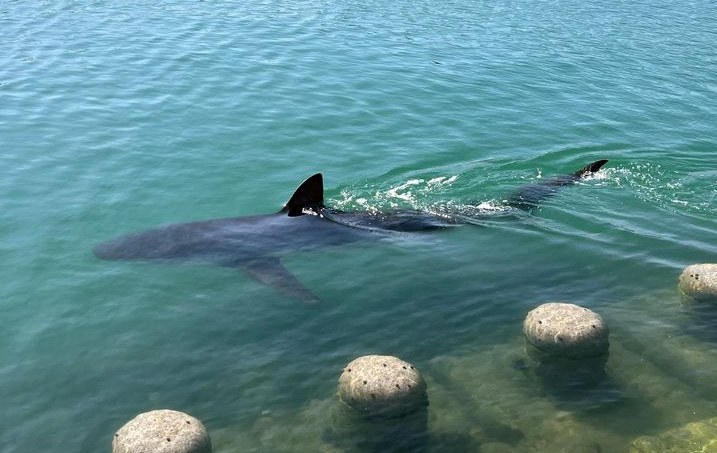
South Korean authorities have mounted a third attempt to guide a shark out of a canal in Busan, more than a month after it entered the artificial waterway and became an unlikely tourist attraction.
Nicknamed Bukang-i after the city’s North Port, the shark was first spotted on 18 September in a canal at North Port Waterfront Park. Estimated at about 3 to 3.5 metres long, it has repeatedly remained in, or returned to, the waterway despite efforts to steer it towards the open sea.
Its prolonged stay has puzzled researchers. Kim Hyun-woo, a senior researcher at South Korea’s National Institute of Fisheries Science, told Reuters that noise, lights and electrical signals could be making it difficult for the animal to find its way out.
However, the cause remains uncertain. The suggestion that underwater technology has trapped or disabled the shark’s navigation is unproven, and the reports reviewed do not identify a particular sonar system or signalling device responsible.
Two earlier rescue operations, using water jets and a large net, failed to secure its release. Following the second attempt, the shark crossed the net and returned deeper into the canal.
For the latest operation on 21 October, authorities arranged a net attached to a pontoon, with one vessel towing the barrier and another using water jets to encourage the shark towards the exit. Personnel were to stand on the floating platform to help prevent it from crossing the barrier again.
The operation’s outcome had not been confirmed in the reports available at the time of writing.
Although earlier reports suggested the animal could be a bronze whaler, Seoul Economic Daily subsequently reported that fisheries researchers had identified it as a dusky shark after examining close-up footage.
Authorities initially hoped cooling water would encourage it to leave independently. Its continued presence has since heightened concern about its survival as temperatures fall.
Meanwhile, Bukang-i has drawn considerable public interest. According to a Yonhap report carried by The Korea Times, cumulative visits to the waterfront park had exceeded 1.6 million by Sunday.
Sources: Reuters, 2 October; Seoul Economic Daily, 8 and 21 October; Yonhap/The Korea Times, 21 October.