 View notices
Century-old fossil reveals previously unknown dinosaur in Britain
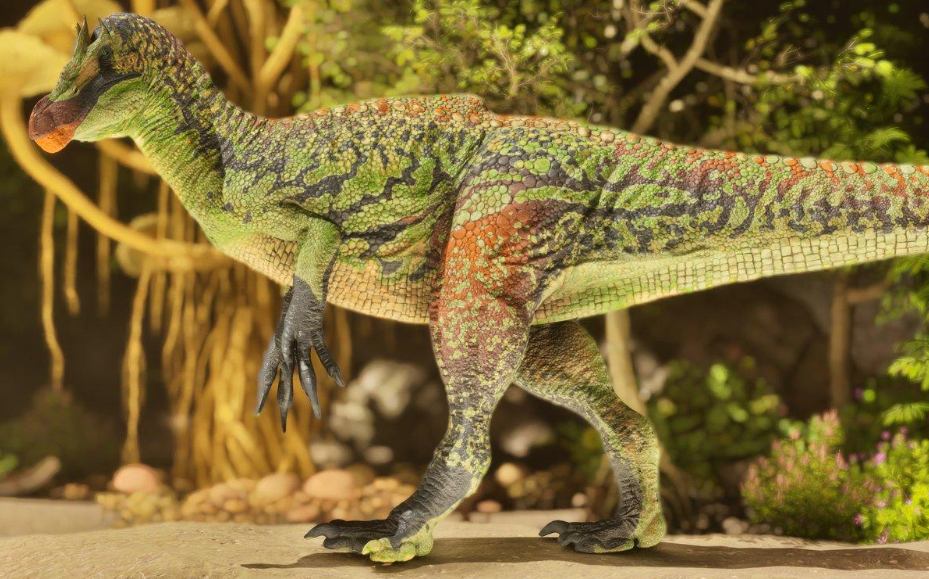
Scientists have identified a previously unknown species of predatory dinosaur from a fossil discovered on Britain's Isle of Wight more than a century ago, revealing that an important group of carnivorous dinosaurs once inhabited Europe.
The discovery, announced on Wednesday, concerns a long-clawed predator known as Invictibellatrix amberina, which lived approximately 120 million years ago during the Early Cretaceous period.
Researchers led by University College London (UCL) identified the dinosaur from a partial skull that had been acquired by London's Natural History Museum in 1924.
ITV News reported that the fossil had remained largely overlooked for more than 100 years before scientists recognised its significance.
The animal belonged to a group of two-legged predatory dinosaurs known as megaraptorans, previously identified elsewhere in the world but not conclusively documented in Europe.
A predator with formidable claws
The newly identified dinosaur was approximately the size of a large tiger and stood a little more than 1.5 metres tall, according to the researchers.
It belonged to a group of carnivorous theropods characterised by powerful forelimbs and prominent claws.
Megaraptorans are considered close relatives of other major predatory dinosaur lineages, although their precise evolutionary relationships have been the subject of scientific debate.
The discovery is particularly important because it extends the known geographical distribution of the group into Europe.
Previously, megaraptoran fossils had been more strongly associated with regions such as South America and Australia.
The identification suggests that these predators were more widely distributed during the Early Cretaceous than previously established.
Museum collections still hold scientific surprises
One of the most striking aspects of the discovery is that the fossil was not newly excavated.
Instead, scientists re-examined material that had been held in a museum collection for more than a century.
The finding illustrates how advances in comparative anatomy and scientific understanding can reveal previously unrecognised species in existing collections.
Britain's Isle of Wight is already recognised as one of Europe's most important locations for dinosaur fossils.
Its Cretaceous rock formations have yielded numerous discoveries, providing evidence of the animals that inhabited the region when much of southern England consisted of river systems, floodplains and coastal environments.
The newly identified species adds another predator to that ancient ecosystem.
It also demonstrates that museum collections remain valuable scientific resources, with specimens collected generations ago potentially containing information that can alter current understanding of prehistoric life.
Sources: ITV News Meridian, 14 October 2026; University College London research; Natural History Museum, London.