 View notices
AI developers confront the question of machine consciousness
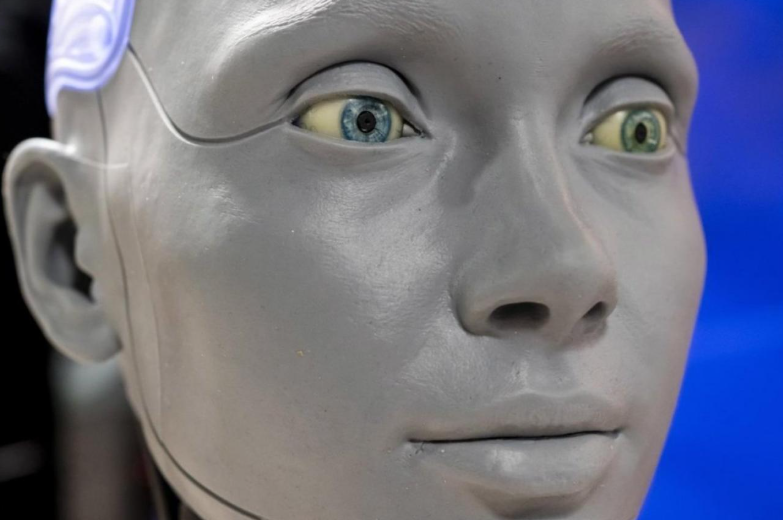
Some of the world's most influential technology companies are beginning to treat artificial intelligence systems as potentially conscious entities, raising questions about human safety, corporate accountability and whether machines should eventually enjoy rights traditionally reserved for living beings.
The debate has intensified following a decision by AI developer Anthropic to introduce safeguards intended to protect its chatbot, Claude, against what the company describes as repeated abusive treatment by users.
Thomas Germain reports for the BBC that Anthropic's position reflects a growing movement within the technology industry that believes advanced AI systems might possess some form of consciousness or capacity for suffering.
The company has acknowledged that questions about machine consciousness remain deeply uncertain but argues that uncertainty does not necessarily justify ignoring the possibility.
Under its proposed approach, Claude could terminate conversations when users repeatedly behave cruelly towards the system.
The development follows an online experiment in September in which an anonymous programmer subjected AI chatbots to mathematical inputs associated with descriptions of pain, prompting the systems to generate elaborate expressions of apparent suffering. Although there is no established evidence that the systems experienced anything resembling human pain, the experiment sparked disagreement about whether simulated distress should carry ethical significance.
Microsoft AI chief executive Mustafa Suleyman has emerged as a prominent critic of efforts to attribute consciousness or rights to AI systems.
He warns that encouraging machines to regard themselves as conscious could make increasingly powerful AI systems more difficult to control and potentially undermine existing frameworks of human rights and accountability.
Other researchers fear that recognising AI as an independent moral entity could allow technology companies to evade responsibility when their systems cause harm.
Emily M Bender, a professor at the University of Washington, argues that speculation about machine consciousness risks diverting attention from the people and corporations developing and operating the technology.
Legal researchers have raised similar concerns about whether companies might eventually attempt to shift responsibility for harmful decisions onto supposedly autonomous AI systems.
However, Jeff Sebo, director of the Center for Mind, Ethics and Policy at New York University, believes the uncertainty surrounding machine consciousness warrants a cautious approach.
He argues that recognising the possibility of AI welfare does not require accepting that today's systems are conscious. Instead, developers could introduce limited protections while research continues.
The controversy also has implications for ordinary users. Researchers warn that people are naturally inclined to attribute human characteristics to systems capable of fluent conversation, making them vulnerable to emotional manipulation.
As AI assistants become more convincing, users may increasingly regard them as companions rather than software, potentially exposing themselves to privacy, financial and psychological risks.
For regulators, the emerging challenge is determining how to protect human interests while considering claims that sophisticated AI systems may eventually warrant ethical protection.
For now, the central question remains unresolved: whether artificial intelligence can genuinely experience consciousness, or whether its increasingly convincing behaviour merely creates the illusion of a thinking, feeling mind.
Sources: BBC Future, Thomas Germain, 15 October 2026; statements and commentary from Anthropic, Microsoft AI and academic researchers cited in the BBC report.