 View notices
Houthi advance around Bab al-Mandeb exposes rival visions for Gulf security
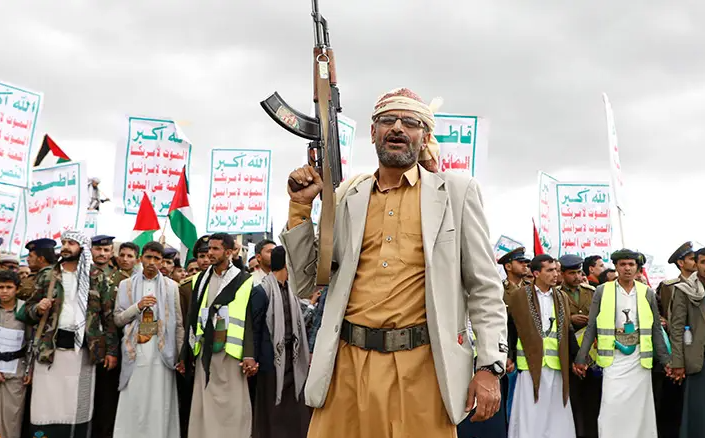
Rapid territorial gains by Yemen's Houthi movement around the Bab al-Mandeb strait have exposed competing approaches to Gulf security among Saudi Arabia, Israel, Turkey, Pakistan and the United States.
According to Dr Burcu Ozcelik, a senior Middle East research fellow at the Royal United Services Institute, the Iran-aligned group, designated a foreign terrorist organisation by Washington, seized Mocha, Dhubab and strategically placed islands along Yemen's Red Sea coast earlier this month.
The Houthis then proceeded to launch attacks on Saudi Arabia on 8 September that injured more than 70 civilians and, Riyadh said, included a drone aimed at Mecca – an allegation the Houthis deny.
A separate strike attributed to an Iran-aligned group in southern Iraq hit Saudi Arabia's East–West oil pipeline, while the Houthis later claimed responsibility for attacks on Riyadh and an Aramco facility at Yanbu, compounding an already unresolved crisis over shipping through the Strait of Hormuz.
According to Ozcelik, internal fragmentation among Saudi-backed Yemeni government forces, tension between Saudi Arabia and the UAE, and limited Western engagement have allowed the Houthis to consolidate both military and political gains, leaving them with little incentive to de-escalate as their forces press towards Marib and Taiz.
She argues Riyadh is unlikely to admit publicly to any willingness to revise its containment approach, and may instead be counting on continued Houthi attacks to eventually force Washington's hand, even as the US State Department has issued a security alert to citizens in the region and Iran claims to have intelligence pointing to a resumption of US strikes on Houthi positions.
Ozcelik identifies three emerging frameworks competing to shape the regional response: the Mecca Joint Defence Agreement, a Saudi–Turkish–Pakistani collective-defence pact signed on 7 August that lacks an integrated command structure; reported Israeli offers of intelligence and targeting support to Saudi Arabia, channelled through US coordination and built on Israel's own experience confronting the Houthis and the UAE's intelligence networks in southern Yemen; and a looser US-led architecture in which Washington supplies coordination and logistics while pushing regional states to absorb more of the operational burden, in line with the Trump administration's stated preference to “shift burdens” rather than fight another open-ended war.
Pakistan has taken the most forward-leaning public stance among the pact's signatories, with defence minister Khawaja Asif describing the defence of Mecca and Medina as a religious obligation, though Ozcelik notes Islamabad appears for now to be converting that commitment into diplomatic leverage on Iran rather than direct military action.
Turkey's interests in Red Sea shipping and its Somalia and Suez Canal presence could support intelligence and surveillance contributions, she writes, but do not necessarily extend to joining a Saudi-led campaign inside Yemen.
Ozcelik argues that Iran may be overplaying its hand, since disrupted shipping also raises the cost of its own trade and China has reportedly urged Tehran to restrain the Houthis, while a deepening global oil shock would add further strain to an Iranian economy already under pressure.
She recommends that the UK focus its contribution on intelligence-sharing, maritime surveillance and sanctions enforcement rather than joining any new bombing campaign, while cautioning that Britain's capacity to respond remains constrained by its commitments to Ukraine and NATO's eastern flank.