 View notices
Beyond shock and disruption: shaping a resilient South Africa
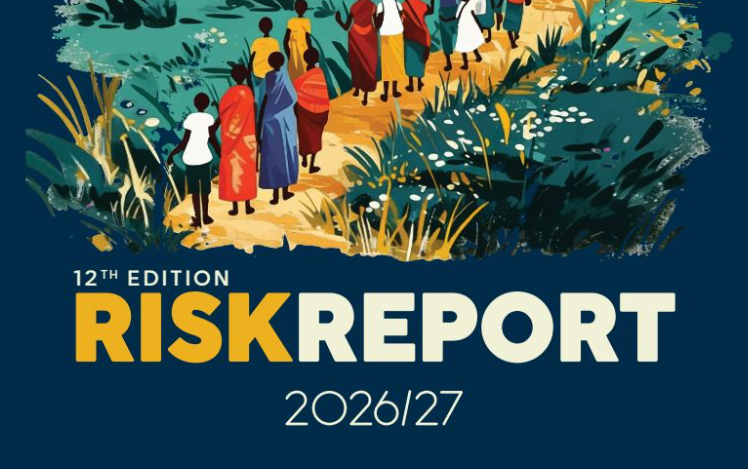
South Africa enters the 2026/27 period confronting a risk landscape defined by complexity, uncertainty and deep interdependence. Governance challenges, fiscal pressures, sluggish economic growth, infrastructure constraints, social instability, climate-related disruptions, cyber threats and organised crime have evolved beyond isolated events. They now represent systemic risks that collectively shape the country’s developmental trajectory and test the resilience of institutions, businesses and communities alike.
In such an environment, the ability to anticipate, understand and respond to risk is no longer a competitive advantage, it is a national imperative. Robust risk intelligence, informed decision-making and coordinated action are essential to safeguarding economic stability, protecting livelihoods and fostering sustainable growth.
As South Africa’s specialist insurer against civil unrest, strikes, riots, public disorder, terrorism and related special risks, Sasria (South African Special Risk Association) operates at the intersection of many of these emerging and persistent threats.
We witness first-hand the economic and social consequences when risks materialise, disrupting businesses, damaging infrastructure, undermining investor confidence and affecting the lives of ordinary citizens.
This perspective reinforces an important reality: resilience is not built in isolation. It is a collective national asset that requires continuous investment, partnerships, collaboration and stewardship.
The 2026/27 Irmsa (Institute of Risk Management SA) Risk Report provides an invaluable contribution to this effort. By presenting a comprehensive view of the risks shaping South Africa’s future, it highlights the interconnected nature of governance weaknesses, macroeconomic fragility, infrastructure challenges, energy and water insecurity, social inequality, climate pressures and digital disruption. More importantly, it demonstrates how these risks compound one another, amplifying vulnerabilities across sectors and communities while influencing investment decisions, economic performance and social cohesion.
For Sasria, the findings contained in this report reaffirm the importance of strengthening a proactive and preventative approach to risk management. While our mandate includes providing financial protection when special risks occur, long-term resilience requires a broader commitment to prevention, mitigation, preparedness and recovery. This demands strong partnerships between government, regulators, industry and civil society, supported by effective governance, sound public policy and sustained investment in institutional and infrastructure resilience.
A particularly important area of focus is local government. It is within municipalities that the realities of these systemic risks are most directly experienced by citizens, where service delivery, infrastructure reliability, disaster response, economic activity and social wellbeing converge. Local government is the sphere closest to communities and therefore the place where resilience must be built, nurtured and sustained. If South Africa is to become more resilient, our municipalities must be at the forefront of such resilience.
Recognising this imperative, Sasria, Irmsa and Salga (South African Local Government Association) have partnered to develop an Integrated Risk and Resilience Framework for Municipalities, aimed at strengthening the capacity of local government to anticipate, prevent, mitigate, respond to and recover from risk events.
The framework seeks to embed a more proactive and forward-looking risk culture within municipalities, enabling leaders to move beyond compliance-driven approaches towards integrated resilience planning and risk-informed decision-making. It provides a practical foundation for building stronger institutions, more sustainable service delivery systems and communities that are better equipped to withstand disruption and adapt to change.
This collaboration reflects an important shift in thinking. Risk management can no longer be viewed solely as a governance function; it must be recognised as a strategic enabler of sustainable development and societal resilience. We therefore call on municipal leaders, policymakers, risk practitioners, development partners and the private sector to actively champion the implementation of resilience-building initiatives across local government. By investing in risk prevention, risk reduction and effective response capabilities today, we can reduce future losses, strengthen public confidence and create conditions for inclusive economic growth and social stability.
The report also offers a powerful reminder that the future is not predetermined. The risks identified herein are significant, but they are not insurmountable. Through ethical leadership, accountable governance, evidence-based decision-making and purposeful collaboration, South Africa can transform risk into opportunity and build a more inclusive, competitive and resilient economy. The choices made today will determine whether future generations inherit a nation strengthened by its challenges or constrained by them.
Ultimately, resilience is not measured by the absence of disruption. It is measured by the ability of institutions, economies and communities to anticipate, adapt and recover while preserving confidence, opportunity and social cohesion.
This column is an edited excerpt from the foreword of the 12th edition of the “Risk Report” 2026/27, compiled by the Institute of Risk Management South Africa (IRMSA).