 View notices
Trump to scale back South Korea drills, citing Kim relationship
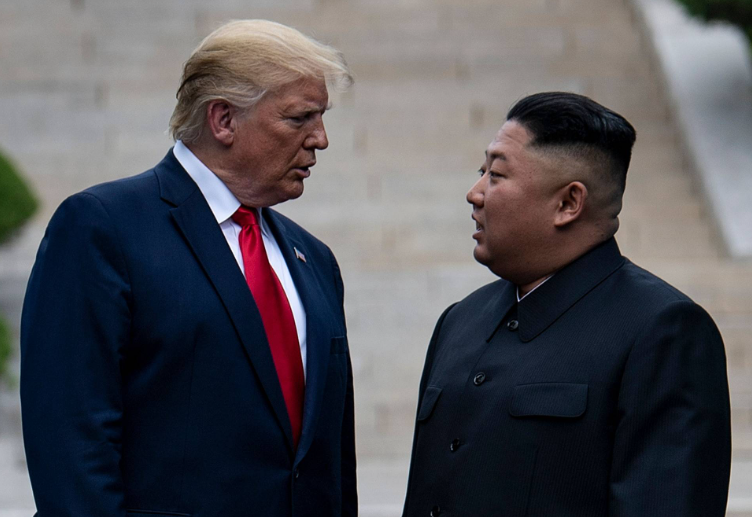
US President Donald Trump has announced plans to “substantially reduce” joint military exercises with South Korea, pointing to what he described as his “very good relationship” with North Korean leader Kim Jong Un, according to the BBC.
Posting on Truth Social on Sunday, Trump argued the drills were costly to the United States and sent “a signal that is totally inappropriate and hostile”. He also noted that South Korea had recently turned down a US request to join efforts around the “denuclearisation” of Iran, writing: “While somewhat unrelated (?), I recently asked the President of South Korea if they would like to join us in the Denuclearization of the Islamic Republic of Iran, and they said, ‘No thanks!'”
The comments came less than a day after Trump shared an old photograph of himself with Kim from 2019, describing the pair as old friends “despite the unfriendly look on this particular picture”.
Seoul said it was reviewing Trump's remarks and expressed hope that warmer relations between Washington and Pyongyang could eventually lead to substantive talks. North Korea has not yet responded.
The presidential Blue House said it would continue diplomatic consultations with Washington on military cooperation tied to the Strait of Hormuz, alongside discussions on the future shape of joint exercises. South Korea had earlier said the drills would proceed “as scheduled”, and by the time of Trump's post it was, in his own words, “too late to cancel” – the annual Ulchi Freedom Shield exercise was due to begin on Monday.
Announced last week at a joint press conference, this year's 11-day exercise was set to involve around 18,000 South Korean troops, in line with previous years. Military leaders at the briefing also referenced North Korea's deployment of troops in support of Russia's war in Ukraine, with US military spokesperson Ryan Donald saying training had been adjusted to account for the experience those soldiers may bring back from the battlefield. Roughly 28,500 US military personnel are currently stationed in South Korea.
North Korea's foreign ministry condemned the exercises on Friday as “a rehearsal for an aggressive war”. The drills come only days after South Korea, the US and Japan detected a second North Korean missile test within the space of a week, following ballistic missile tests earlier this month that violate United Nations resolutions.
Analysts have warned that scaling back the exercises risks real costs for limited return. “US–South Korea combined defence exercises are essential for military forces to be ready and capable of doing their jobs,” said Leif-Eric Easley, a professor at Ewha University in Seoul.
“Scaling them back can damage alliance coordination, slow the process of South Korea taking on greater responsibility for its own defence, and weaken deterrence against possible conflicts in Asia. The cost savings from downsizing drills are marginal, while the diplomatic benefits for relations with North Korea are doubtful.”
Trump's posts have landed as a mixed signal in Seoul. South Korean officials have long urged Washington to re-engage diplomatically with Pyongyang, and the outreach to Kim raises hope of renewed talks.
But Trump's comments also appear to reflect frustration with South Korea's reluctance to offer direct military or logistical support for US action against Iran – a frustration he has voiced towards other allies, including Japan, France and the UK, over their hesitance to become involved in that conflict.
Trump has form on this front. He suspended the exercises entirely in 2018 during denuclearisation talks with Kim, at the time calling the drills “provocative” and describing the suspension as a way to save the US “a tremendous amount of money”.
That collapsed diplomatic push, which in 2019 made Trump the first sitting US president to set foot in North Korea, gave way to an acceleration of Pyongyang's nuclear and missile programmes. The exercises were scaled back again in 2020 during the Covid-19 pandemic.
The latest development follows a proposal last week by South Korean President Lee Jae Myung for talks with the North aimed at formally ending the Korean War, which has remained technically active since the 1953 armistice.
Trump has repeatedly criticised the scale of the US troop presence in South Korea and its cost to Washington, a recurring source of friction with Seoul, which regards the alliance as central to its security. South Korea has sought to ease those tensions this year, committing $350 billion to US investment, while Lee described Trump as a peacemaker last year.