 View notices
Survey points to ANC losing majority in Buffalo City, tight races in key metros
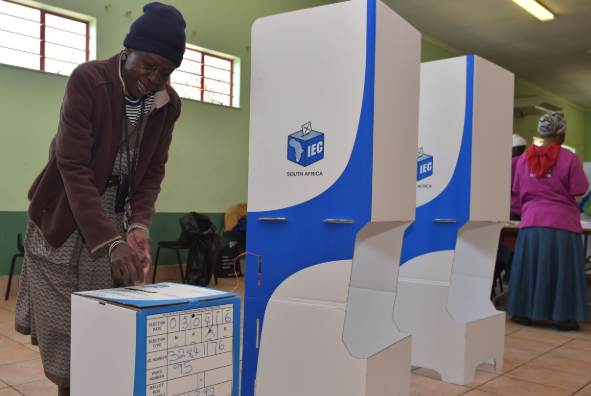
The latest Ipsos survey on November's local government elections suggests the African National Congress could lose ground in several of its traditional strongholds, with the party facing its first-ever drop below 50% support in the Buffalo City metro.
According to the survey, the ANC's support in Buffalo City is projected to fall to 29%, down some 30 percentage points from the 59,4% it secured there in the 2021 local government elections.
The Democratic Alliance (DA) is shown overtaking the ANC in the metro for the first time, on 33%, Babalo Ndenze and Lindsay Dentlinger reports for EWN.
Ipsos data also points to a close contest in Nelson Mandela Bay, where the ANC and DA are both polling at 37% – a result that would again require a coalition government, led by either party.
The survey found that current voting intentions suggest Johannesburg, Ekurhuleni, Nelson Mandela Bay and Buffalo City could all see competitive races between the ANC and the DA. In the Western Cape, the DA holds a wide lead, polling at 47% against the ANC's 25%.
Ipsos further found that between a quarter and three in ten registered voters in KwaZulu-Natal, the Northern Cape, North West and the Free State said they were unlikely to vote in the coming election.
Of the 3,600 respondents surveyed, 33% said they were “very likely” to vote and a further 43% said they were "likely" to do so.
Turnout intentions were notably higher in the metros. Ipsos said 85% of respondents polled in the City of Cape Town – the only metro not currently governed by the ANC or a coalition – said they would definitely vote, while 98% in Mangaung and 87% in Nelson Mandela Bay said they had already settled on a party.
Nationally, the ANC remains the leading party of choice at 31%, ahead of the DA on 25%, the uMkhonto weSizwe Party on 14% and the Economic Freedom Fighters on 11%.
The Ipsos survey was conducted between June and July this year, interviewing 3,600 randomly selected South Africans in their homes and in their home languages.