 View notices
Reserve Bank holds repo rate at 7.25% in split vote
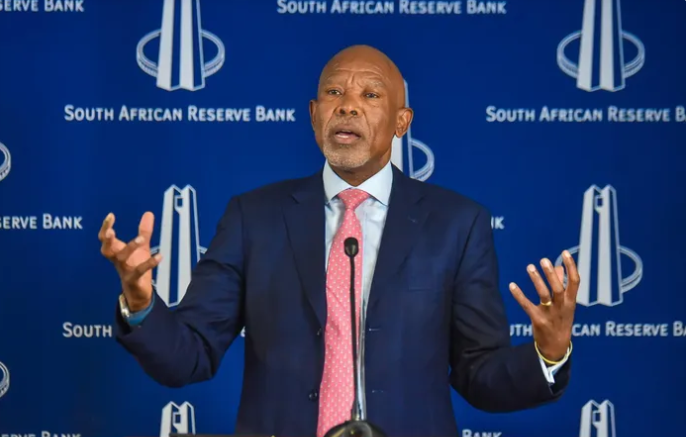
The South African Reserve Bank (SARB) kept its repo rate at 7.25% on Thursday, leaving the prime lending rate at 10.75%.
Four members of the Monetary Policy Committee (MPC) backed the hold and three favoured a 25-basis-point increase at the Bank’s final rate meeting of 2026.
Governor Lesetja Kganyago said the committee had room to pause after two increases this year. He warned that the Bank was prepared to raise rates again if needed to bring inflation back to its 3% target.
The hold was widely expected. In a Reuters poll conducted before Wednesday’s inflation release, 24 of 27 economists forecast no change and three expected a quarter-point increase. A separate Bloomberg survey found that 19 of 20 economists expected the Bank to hold. The committee’s 4–3 vote showed how narrowly it reached the outcome most economists had forecast.
Fuel drove October’s inflation jump
Annual consumer inflation rose to 5.2% in October from 4.5% in September, its highest level since May 2024. Consumer prices increased by 0.7% between September and October, according to Statistics South Africa.
Transport prices rose 15.2% year on year and contributed 2.1 percentage points to the headline figure. Fuel prices jumped 11.8% in October alone and were 42.9% higher than a year earlier. A litre of 95-octane inland petrol cost R30.25 in October, while diesel averaged R35.62 a litre.
Price pressures extended beyond fuel. Core inflation, which strips out food, non-alcoholic beverages, fuel and energy, rose to 4.2% from 4%. Services inflation edged up to 5%, while housing and utilities contributed 1.3 percentage points to the headline figure.
Food and non-alcoholic beverage inflation remained comparatively low at 1.4%, although vegetable prices rose 8.1% year on year. Lower prices for staples such as maize meal and white rice helped keep the overall food figure down.
Why the Bank paused
Kganyago said oil prices had eased in recent weeks but remained elevated. Higher refinery margins and shipping rates were also feeding into fuel costs, while global food inflation was accelerating. At home, the Bank said market-based inflation expectations had eased modestly since September. It will be watching how households and businesses respond to the latest price increases.
The Bank expects annual inflation to stay above 5% into early 2027. It then sees the rate easing in part because fuel prices will be compared with levels that already reflected the jump following the outbreak of the Iran war. A smaller year-on-year increase can bring inflation down even while fuel remains expensive.
The SARB’s assessment is that inflation could come in higher than its forecast. A stronger dollar and weaker rand could raise import costs, while dry conditions associated with El Niño could damage harvests and push up food prices. The Bank also wants to see the rise in core inflation reverse, an indication that businesses are setting prices in line with its 3% target.
Where economists differed
Ahead of the announcement, Razia Khan of Standard Chartered told Reuters that earlier fuel-price increases largely explained October’s inflation reading. With oil prices easing in November and previous rate hikes still working through the economy, she saw little reason for the October figure to change the committee’s thinking.
Shannon Bold of the Bureau for Economic Research also expected a hold and flagged the possibility of a split vote.
Johannes Khosa of Nedbank took the other side. He expected a quarter-point increase, citing persistent fuel cost pressures, recent rand weakness and the risk that El Niño could drive up food prices.
Tertia Jacobs of Investec, speaking to Bloomberg before the decision, said oil’s retreat towards $90 a barrel would amplify the effect of fuel levy relief and help ease inflation in the final quarter of 2026 and the first quarter of 2027. She also saw a risk of a rate hike next year if tighter US monetary policy strengthened the dollar.
Michael Temple of Prescient Investment Management told Bloomberg that another hike would be hard to justify while the economy was operating below its potential, provided core inflation and inflation expectations could be contained. Kevin Lings, Stanlib’s chief economist, told Eyewitness News that waiting would give the Bank time to assess whether lower oil prices would translate into further relief at South African pumps.
What the hold means for borrowers and businesses
Thursday’s decision leaves the benchmark for prime-linked home loans and business credit unchanged. Borrowers on variable rates tied to prime will see no rate-driven change in repayments from this meeting. They continue to pay at rates that reflect the two increases already made this year.
The decision came against a weakening currency. Daily Investor reported that the rand touched R17.35 to the dollar before recovering to about R17.22 by Thursday afternoon, as expectations of a US rate increase supported the dollar. A weaker rand can offset some of the benefit of cheaper oil because South Africa pays for imported fuel in dollars.
The Bank expects economic growth of 1.2% this year, with annual growth gradually approaching 2% over its forecast period. Wholesale and retail sales have helped support the recovery after a second-quarter contraction. Kganyago said a more durable recovery would depend on stronger investment. Fixed investment stands at about 13% of economic output, well below South Africa’s historical peaks.
The outlook for 2027
The SARB’s main model still shows scope for lower interest rates next year as inflation moves back towards 3%. The committee will make each decision based on incoming data and how the risks change.
The Bank also tested a scenario in which oil peaks at $130 a barrel and refinery margins stay high. Under those assumptions, headline inflation remains above 5% in 2027, growth slows to about 1% and the model implies roughly two rate increases. The Bank’s next scheduled decision is on 28 January 2027, after the November and December inflation releases.
Sources: SARB MPC statement, Stats SA, October CPI, Reuters, Bloomberg via Moneyweb, Eyewitness News, Daily Investor, The Wall Street Journal, Stats SA CPI release calendar.