 View notices
Regional energy exports eyed to curb R49bn wind losses
The minister said the government was considering selling surplus renewable electricity into the SADC.
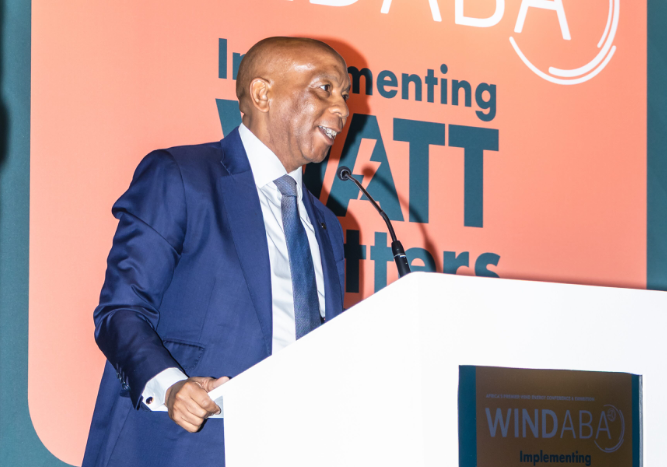
South Africa is exploring the possibility of exporting surplus wind-generated electricity to neighbouring countries and accelerating battery storage deployment to address grid constraints that could be costing the economy nearly R49 billion annually.
Electricity and Energy Minister Kgosientsho Ramokgopa outlined the proposals during his keynote address at Windaba 2026, held at the Cape Town International Convention Centre on 6 and 7 October.
The minister said the government was considering selling surplus renewable electricity into the Southern African Development Community (SADC) region while accelerating the provision of 4.6 gigawatts (GW) of battery storage capacity.
According to Ramokgopa, electricity curtailment, which occurs when renewable energy generators are instructed to reduce output because the grid cannot accommodate or transmit the power, represents a significant loss.
“We’re losing potential revenue of close to R49-billion per annum,” he said. Expanding South Africa’s transmission infrastructure would be essential to accommodate thousands of megawatts of additional renewable generation capacity and reduce these losses.
Ramokgopa said South Africa’s extensive electricity network could become a catalyst for regional economic development, with wind energy playing an increasingly important role in industrialisation and job creation.
He also pointed to growing global electricity demand, particularly from artificial intelligence and data centres, as evidence that energy security was becoming an increasingly important determinant of economic growth.
However, officials from the National Transmission Company South Africa (NTCSA) cautioned that the country’s existing electricity generation mix presents operational challenges. Gav Hurford and Paul Davel explained that the lack of sufficient flexible generation capacity to meet peak demand means coal-fired power stations must remain operational, even when renewable energy production is high.
This can result in available wind and solar generation being curtailed because the system cannot absorb the additional electricity.
Among the proposed solutions are utility-scale battery installations capable of storing surplus electricity during periods of high renewable generation and releasing it during evening demand peaks.
Other measures include exporting surplus electricity to neighbouring countries and introducing dynamic time-of-use tariffs to encourage consumers to shift electricity consumption to periods when renewable generation is plentiful.
Department of Electricity and Energy acting deputy director-general Mthokozisi Mpofu said future renewable energy procurement programmes might also need to require generation projects to incorporate battery storage facilities.
The approach would help address curtailment as renewable energy accounts for a growing proportion of South Africa’s electricity supply.
Meanwhile, South African Wind Energy Association (SAWEA) interim CEO Titania Stefanus-Zincke said the industry had made considerable progress during 2026, with more than 800 megawatts (MW) of wind generation facilities reaching commercial operation.
The association expected new wind capacity commissioned across the public and private sectors to exceed 1 GW by year-end.
Wind developers had also contributed to transmission infrastructure expansion, including the installation of 116 kilometres of transmission lines.
However, Stefanus-Zincke warned that the industry needed to accelerate the transition from policy development to project implementation.
She said South Africa would require approximately 3 GW of additional wind generation annually from 2030, making investment in grid infrastructure, logistics capacity and skilled workers increasingly urgent.
The conference, held under the theme “Implementing Watt Matters: Policy. Power. People”, also examined electricity market reform, grid access, renewable energy trade policy, import tariffs and the development of offshore wind generation.
The discussions highlighted the challenge facing South Africa’s energy transition: expanding renewable generation while ensuring the national grid can accommodate and distribute the additional electricity.
Sources: Windaba 2026, Cape Town, 6–7 October 2026; South African Wind Energy Association (SAWEA), Windaba conference proceedings and statements, October 2026.