 View notices
Police corruption must be rooted out to rebuild public trust – Ramaphosa
South Africans had a right to know that those responsible for fighting crime were not themselves colluding with criminals.
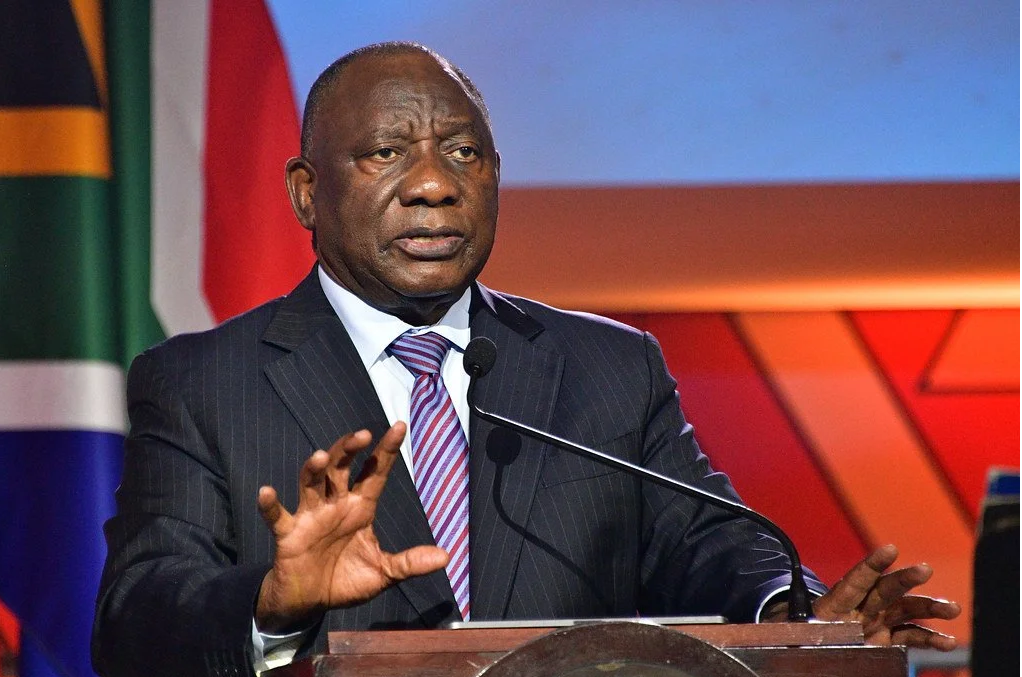
President Cyril Ramaphosa has said that restoring public confidence in the South African Police Service (Saps) cannot happen unless corruption and criminality within the force are rooted out.
Writing in his weekly newsletter on Monday, the president said South Africans had a right to know that those responsible for fighting crime were not themselves colluding with criminals.
His comments come as the Judicial Commission of Inquiry into Criminality and Political Interference in the Criminal Justice System, chaired by Judge Mbuyiseli Madlanga, continues its work.
“The allegations that have been made about criminal infiltration, corruption and political interference in parts of our criminal justice system are deeply disturbing,” Ramaphosa said.
“South Africans are entitled to know the truth. They are entitled to know that those entrusted with fighting crime are not themselves working with criminals.”
He said the commission had to be given room to complete its inquiry without interference, and that any wrongdoing uncovered must carry consequences.
“The commission must be allowed to do its work thoroughly and without fear, favour or interference. Where wrongdoing is established, there must be consequences. Where crimes have been committed, the law must take its course,” he said.
Officer deaths down, but toll remains a concern
Ramaphosa's remarks followed Saps National Commemoration Day on Sunday, which honoured officers who died on duty over the past year. He said 12 officers had lost their lives in the 12 months to March – half the figure recorded the previous year.
“Although this is half as many deaths as the year before, even one death of a Saps member is one too many,” he said.
He praised officers serving under difficult conditions, noting that the service – which has more than 180,000 members and over 3,000 reservists – remained central to operations against illegal mining, cable theft, infrastructure vandalism, smuggling, counterfeiting and human trafficking.
“For every incompetent or corrupt Saps member, there are many thousands more who are not. Most Saps members serve with honour and embody the values of the badge they wear,” he said, adding that wrongdoing by some should not be allowed to define the service as a whole.
Public trust “must be earned”
Ramaphosa acknowledged that public confidence in the police remained weak, pointing to the 2025/26 Governance, Public Safety and Justice Survey from Statistics South Africa, which found that some crime victims did not report offences because they believed police would take no action.
“We cannot dismiss this sentiment as simply a perception. We must take it seriously. Trust is one of the most important weapons we have in the fight against crime,” he said. He said trust could not be demanded but had to be built through consistent, effective policing.
“It is earned when a telephone call is answered, when a police vehicle arrives, when a case is properly investigated and when a victim is treated with dignity. Above all, it is earned when criminals are arrested, prosecuted and brought to justice,” he said. Recruitment drive and professionalisation
On efforts to strengthen the service, Ramaphosa pointed to Project 11 000, a recruitment initiative under which a further 5,500 constables will shortly begin training. He cautioned, however, that boosting numbers alone would not be enough.
“Strengthening the police is not only about increasing numbers. It is about ensuring that we recruit the right people, give them the right training, equip them properly and place them where they are most needed,” he said.
He added that psychometric and integrity testing now formed part of the initial recruitment phase, ahead of fitness, vetting and medical assessments, and that policing required discipline and integrity above all else.
“There can be no place in the Saps for criminals. There can be no place for corruption, and there can be no place for political interference in the work of the police,” he said.
Ramaphosa also called for stronger crime intelligence, improved detective and forensic capacity, wider use of technology, and better-functioning police stations with a stronger community presence.
A shared responsibility
The president said building a safer society depended on cooperation between the state and communities, including through community policing forums and volunteer reservists. “Government carries the primary responsibility for keeping people safe, but the police cannot defeat crime without the support and cooperation of communities,” he said.
He argued that fighting crime and tackling corruption within the police were two sides of the same task.
“We cannot build public confidence in the police unless we root out corruption. And we cannot defeat crime unless the police have the confidence and cooperation of the public,” he said.
Ramaphosa closed his newsletter by thanking serving officers and paying tribute to those who had died in the line of duty, saying government remained committed to building “a police service that is professional, capable, honest and worthy of the trust of the South African people”.