 View notices
Pentagon plans public broadcast of Fort Hood killer’s execution
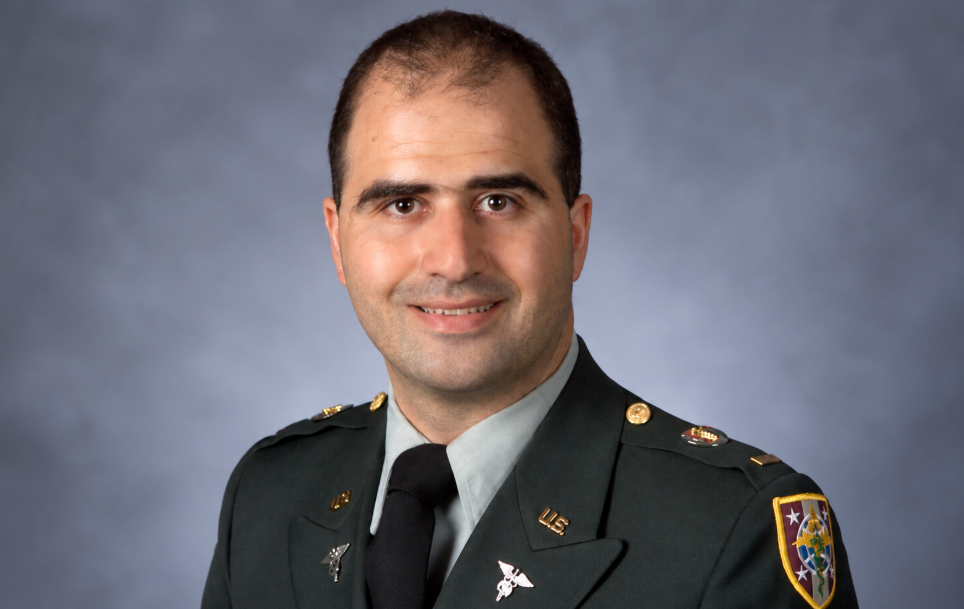
The United States is preparing to execute former Army major Nidal Hasan by firing squad in December, with plans to livestream the proceedings in what could become the country's first publicly broadcast execution.
US Defence Secretary Pete Hegseth said the execution would take place on 3 December at Fort Hood in Texas, where Hasan shot dead 13 unarmed soldiers in 2009.
A Defense Department official confirmed to the BBC that the execution would be livestreamed, Sareen Habeshian reported for the broadcaster.
Hasan, a former US Army psychiatrist from Virginia, admitted carrying out the shooting in a crowded medical building. He was sentenced to death following a court martial in 2013.
The execution would be the first carried out by the US military in more than 60 years and the first military execution by firing squad since World War Two.
Hegseth defended the decision, saying the public needed to understand that such crimes carried serious consequences.
Speaking to conservative television outlet Real America’s Voice, he said Hasan would face a firing squad of soldiers, adding that the method was appropriate.
Asked whether Hasan had made any final requests or appealed to President Donald Trump, Hegseth dismissed the question and reiterated the planned execution date.
A Pentagon spokesperson said Trump had approved the defence secretary’s recommendation. However, the proposed public broadcast has drawn criticism from human rights organisations, legal experts and politicians.
The UN human rights office told AFP that livestreaming the execution would be “tantamount to a public execution and would breach the absolute prohibition of torture”.
Democratic Senator Chris Murphy told CNN that the proposal was “disgusting”, comparing it to executions carried out by the Islamic State group.
John Mills, a lawyer representing prisoners sentenced to death, told the BBC that the proposal was unprecedented in the modern era and raised serious legal questions.
He also questioned whether the execution would proceed as scheduled because Hasan had not exhausted the appeals process.
Under US military law, executions require presidential approval, appellate review and a final determination of their legality.
Mills said Hasan was likely to seek further review of his conviction and sentence in federal court, potentially delaying the execution.
Deborah Denno, a law professor at Fordham University who has studied execution methods, told the BBC that the United States had never previously livestreamed an execution.
She said a public broadcast would introduce an unprecedented degree of transparency into how capital punishment was carried out.
Questions have also been raised about safeguards to prevent children from viewing the execution.
US Army regulation 190-55 prohibits people younger than 18 from witnessing military executions. The BBC has asked the Pentagon and US Army whether the restrictions would apply to the livestream.
Meanwhile, survivors of the Fort Hood attack have expressed differing views about the proposed broadcast.
Former US Army sergeant Alonzo Lunsford, who was shot seven times during the attack, told the BBC’s Today programme that he supported Hasan’s execution by firing squad but questioned whether the broadcast should be available to everyone.
He said survivors and the families of those killed should be allowed to witness the execution without censorship.
Lunsford intended to attend the execution and said he wanted Hasan to see that he had survived the attack.
According to Amnesty International, public executions remain rare internationally. The organisation recorded 11 in Iran and six in Afghanistan during 2025.
The proposed execution comes amid renewed emphasis on capital punishment under Trump, who reversed former president Joe Biden’s moratorium on federal executions after returning to the White House.
A Pew Research survey conducted in July found that 66% of Americans supported the death penalty for people convicted of murder, an increase of six percentage points over five years.
The last US military execution took place in 1961, when an Army private was hanged following his conviction for the rape of an 11-year-old Austrian girl.
The last military execution by firing squad occurred in January 1945, when US Army deserter Eddie Slovik was executed during the final months of World War Two.
Whether Hasan’s execution proceeds on 3 December will depend on the outstanding legal processes, while the Pentagon has yet to clarify how the proposed livestream would comply with existing military regulations.
The controversy comes just days after a botched execution in Tennessee, where 50-year-old death-row prisoner Christa Pike survived a lethal injection on 30 September. Pike, sentenced to death for the 1995 torture and murder of 19-year-old Colleen Slemmer, remained alive after receiving two doses of the execution drug pentobarbital.
She was rushed to hospital in critical condition, suffering severe complications.
Reuters reported that Pike subsequently regained consciousness and began speaking, while The Guardian reported on Thursday that she had started walking short distances, although she remained physically impaired.
The failed execution prompted Tennessee Governor Bill Lee to suspend all further executions in the state for the remainder of 2026 and order an independent investigation. Pike's lawyers have challenged the circumstances of the attempted execution, arguing that she was subjected to cruel and unusual punishment.
A Tennessee court has ordered officials to preserve evidence relating to the procedure, while the state has not ruled out another attempt to carry out her death sentence. The incident has intensified scrutiny of execution methods in the US, particularly amid the Pentagon's plans to conduct a publicly broadcast firing-squad execution.
Sources: BBC News, Sareen Habeshian, with additional reporting by Kwasi Gyamfi Asiedu and Kali Hays, October 2026; AFP; CNN; Amnesty International, 2025 execution data; Pew Research Center, August 2026; US Army Regulation 190-55.