 View notices
Netanyahu’s opponents see an opening, but Israeli politics rarely cooperates
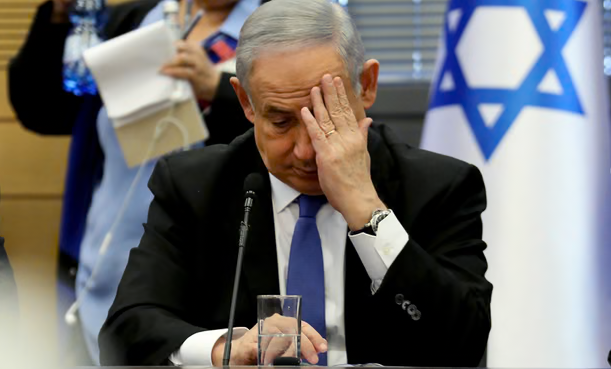
In a political career spanning more than three decades, Benjamin Netanyahu has been written off too many times to count, only to prove the obituaries premature.
This week’s election results appear to give the prime minister’s opponents a chance to end his run, but in Israel’s ruthless political system it is no guarantee, Tal Shalev reports for CNN.
With about 90% of votes counted in Tuesday’s election, the Central Election Committee said Netanyahu’s bloc of Likud, Shas, United Torah Judaism, Otzma Yehudit and Religious Zionism was on course for 53 of the Knesset’s 120 seats, eight short of a majority and down from 68 in the outgoing parliament.
The bloc led by Gadi Eisenkot’s Yashar party was on 48, with Arab parties surging to 19, the paper said.
According to the Jerusalem Post, Yashar is projected to win 21 seats, a Bennett-Lapid list called B’Yachad 12, Yair Golan’s Democrats eight and Avigdor Lieberman’s Yisrael Beytenu seven, while the Joint List has 12 seats and Ra’am seven. Golan declared that Netanyahu had lost, because the opposition reaches 65 seats if Arab parties are included.
That arithmetic is easier said than done. Eisenkot has rejected serving under Netanyahu, including in a rotation, and resistance within the opposition to relying on Arab parties could complicate any alternative coalition, the Jerusalem Post said.
Ynetnews reported that the deadlock could leave a caretaker government in place or lead to another election.
Further updates were unlikely at 10:20am SAST on 29 October, as the committee turns to double-envelope ballots and others needing extra oversight, the Times of Israel said.
Sources: CNN; Times of Israel, 28 October 2026; Jerusalem Post; Ynet.