 View notices
Netanyahu’s future on the line as Israel goes to the polls
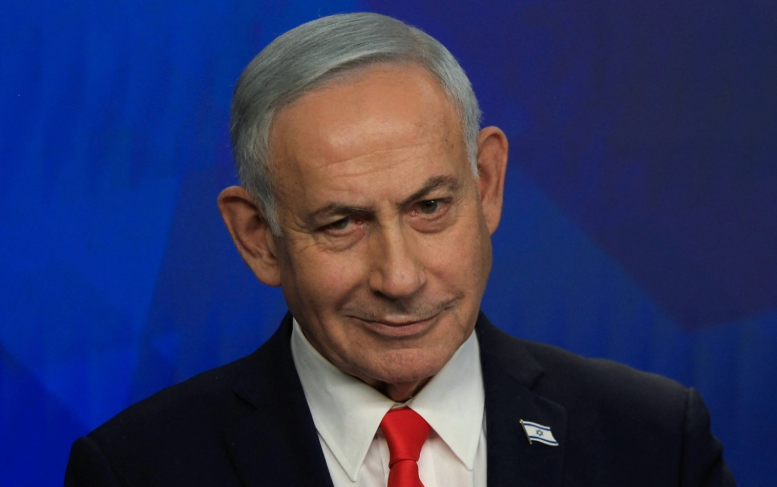
Israelis are voting today in an election that could determine whether Prime Minister Benjamin Netanyahu remains in power, with former military chief Gadi Eisenkot emerging as his leading challenger.
The contest is Israel’s first general election since the Hamas-led attacks of 7 October 2023 and the subsequent war in Gaza. It comes amid debate over the security failures that preceded the attacks, the conduct of the war, the fate of hostages and who should be required to perform military service.
Pre-election polls suggested a close race between Netanyahu’s Likud party and Eisenkot’s Yashar party. But the outcome will depend on more than which party wins the most votes: either leader must be able to secure enough support in the 120-seat Knesset to form a government.
Who is Eisenkot?
Eisenkot, a former chief of the Israel Defence Forces, leads the centrist Yashar party. He presents an alternative to Netanyahu’s right-wing governing coalition, which includes far-right and ultra-Orthodox parties.
While Eisenkot is to the centre of Netanyahu’s government, he is not a straightforward left-wing candidate. His platform places strong emphasis on national security, including confronting Iran and dismantling Hamas’s rule in Gaza. He has also opposed the establishment of a Palestinian state.
Among the clearer differences at home is military service. Eisenkot has pledged to end exemptions for ultra-Orthodox men, a contentious issue in a country where many other citizens are required to serve. Netanyahu has backed exemptions for ultra-Orthodox communities whose parties are important members of his coalition.
The opposition also includes former prime minister Naftali Bennett, whose Together party is among those expected to play a role in coalition negotiations. Eisenkot’s party has worked with other opposition parties on preparations for a possible government, although the parties have not settled how their candidate for prime minister would be chosen. Could the government change?
A change of leadership is possible, but far from assured. An average of nine polls published up to 23 October put Netanyahu’s bloc at about 52 seats and the main anti-Netanyahu Zionist parties at about 50 - both short of the 61 seats needed for a majority. The same average assigned about 14 seats to two Arab-led lists.
Those numbers illustrate the difficulty facing both camps. Israel’s opposition is divided across parties with differing views, and mainstream opposition leaders have ruled out formal coalition partnerships with Arab parties. Parties near the electoral threshold could also affect the final allocation of seats.
A strong showing for Eisenkot would therefore not automatically make him prime minister. After the results, Israel’s president will consult party leaders and ask a Knesset member considered most likely to succeed to try to form a government. Negotiations could take weeks, and a prolonged deadlock remains possible.
A government led by Eisenkot could bring a change in leadership and domestic priorities, particularly on military service and accountability. But his security-focused platform and opposition to Palestinian statehood suggest that a change at the top would not necessarily bring a fundamental shift in Israel’s policy towards the Palestinians.
Sources: Associated Press, 27 October; The Jerusalem Post, 25 October; Israel Votes 2026, polling average to 23 October; Jewish Telegraphic Agency, 17 October.