 View notices
Manuel warns of renewed grey-list risk as Madlanga Commission unfolds
The Zuma years — 2009 to 2018, the period associated with state capture — continues to be felt. – Trevor Manuel
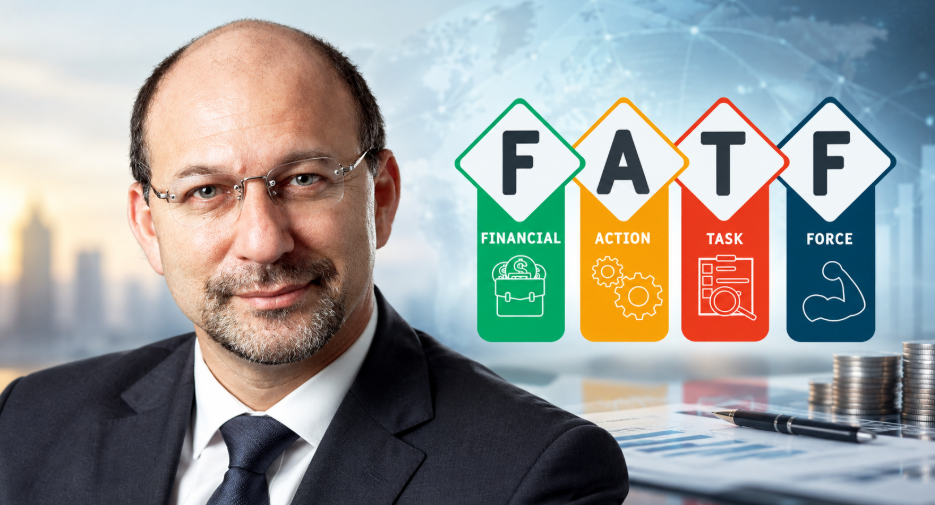
Financial Action Task Force (FATF) officials in Paris are almost certainly following the Madlanga Commission's proceedings, former finance minister Trevor Manuel has said, warning that South Africa's problems with the global anti-money-laundering body have not gone away.
The Madlanga Commission is investigating criminality, political interference and corruption within the criminal justice system.
Nellie Brand-Jonker reports for Netwerk24 that South Africa sat on the FATF's grey list — reserved for countries judged not to be doing enough to prevent money laundering — from February 2023 until October last year, and is currently going through a fresh round of FATF evaluation.
National Treasury said earlier this year that considerable work remains, citing continuing weaknesses in the prevention, identification, investigation and prosecution of money-laundering and terror-financing cases.
Speaking to former judge Dennis Davis on Thursday at a Ninety One event bringing together regulators, policymakers, investment managers and senior industry leaders, Manuel said South Africa's regulatory problems stem largely from a shortage of capable officials to administer them.
He argued that transformation policy, where pursued narrowly through the lens of employment equity, excludes people who ought to be involved, and that a broader skills shortage leaves the country struggling to keep pace with regulation.
South Africa, he said, often tries to replicate British-style legislation without the institutional depth to match it: Britain's Prudential Regulation Authority and Financial Conduct Authority draw on highly experienced staff, while South African authorities attempt equivalent oversight with a handful of people, lacking both the experience and the funding to build the expertise regulators need.
Davis said the country's difficulty is that it has “Rolls-Royce legislation” without the people to run it — comprehensive on paper, but not workable in practice — and asked Manuel how South Africa should balance the need for regulation against the risk of stifling development.
Manuel replied that the damage goes well beyond the commonly cited “nine lost years”, arguing that harm done during the Zuma years — 2009 to 2018, the period associated with state capture — continues to be felt, and that South Africa's institutional capacity was stripped out during that time.
Manuel said South Africa was, in a sense, fortunate that its position is less severe than it might have been, but maintained that its underlying FATF problems persist. He said he was confident that officials in Paris are watching the Madlanga Commission just as South Africans are, and drawing their own conclusions about the state of the police.
While legislation exists to address these problems, he said, it counts for little without real deterrents for misconduct. He pointed to Hangwani Maumela — described as the alleged mastermind behind roughly R2 billion in looting at Tembisa state hospital — who bought three Lamborghinis from a dealer that sold them without checking the source of his income; Manuel said he hoped both Maumela and the dealer would face lengthy prison terms.
He argued that South Africa needs a prosecuting authority that is bigger, more dynamic and more capable — one that not only brings cases to court but secures convictions.
Manuel also voiced deep concern about rising US government debt, which he put at around 135% of GDP, or roughly 1.25 times the country's annual economic output — an enormous figure even for an economy of that size, he said, with total US debt levels considerably higher still.
He said American regulators tasked with overseeing the financial system are failing to do so effectively, suggesting the sheer number of US regulatory bodies has left each unsure of its role, allowing bad actors to get away with misconduct. He described this as a dangerous moment in American financial history, comparable to the run-up to the 2008 global financial crisis — which originated in risky US home lending and complex financial products that unravelled and spread through banks and markets worldwide — and to the 1998 collapse of the hedge fund Long-Term Capital Management, whose heavy borrowing to expand its market exposure nearly destabilised the wider financial system.
The underlying risk, he said, is that a small number of highly leveraged players can create problems that ripple far beyond their own positions, and that regulatory failure in the US tends almost inevitably to produce large-scale problems that spread to the rest of the world.