 View notices
Johannesburg sewage crisis puts Lion Park housing expansion under pressure
Thousands of planned homes in north-west Johannesburg are raising fresh questions about the city's ability to provide adequate water and sanitation infrastructure, as failing pump stations and sewage spills threaten local rivers.
The rapid expansion of residential developments in the former Lion Park area of north-west Johannesburg is placing increasing pressure on already strained sewage infrastructure, prompting calls for decentralised wastewater treatment solutions.
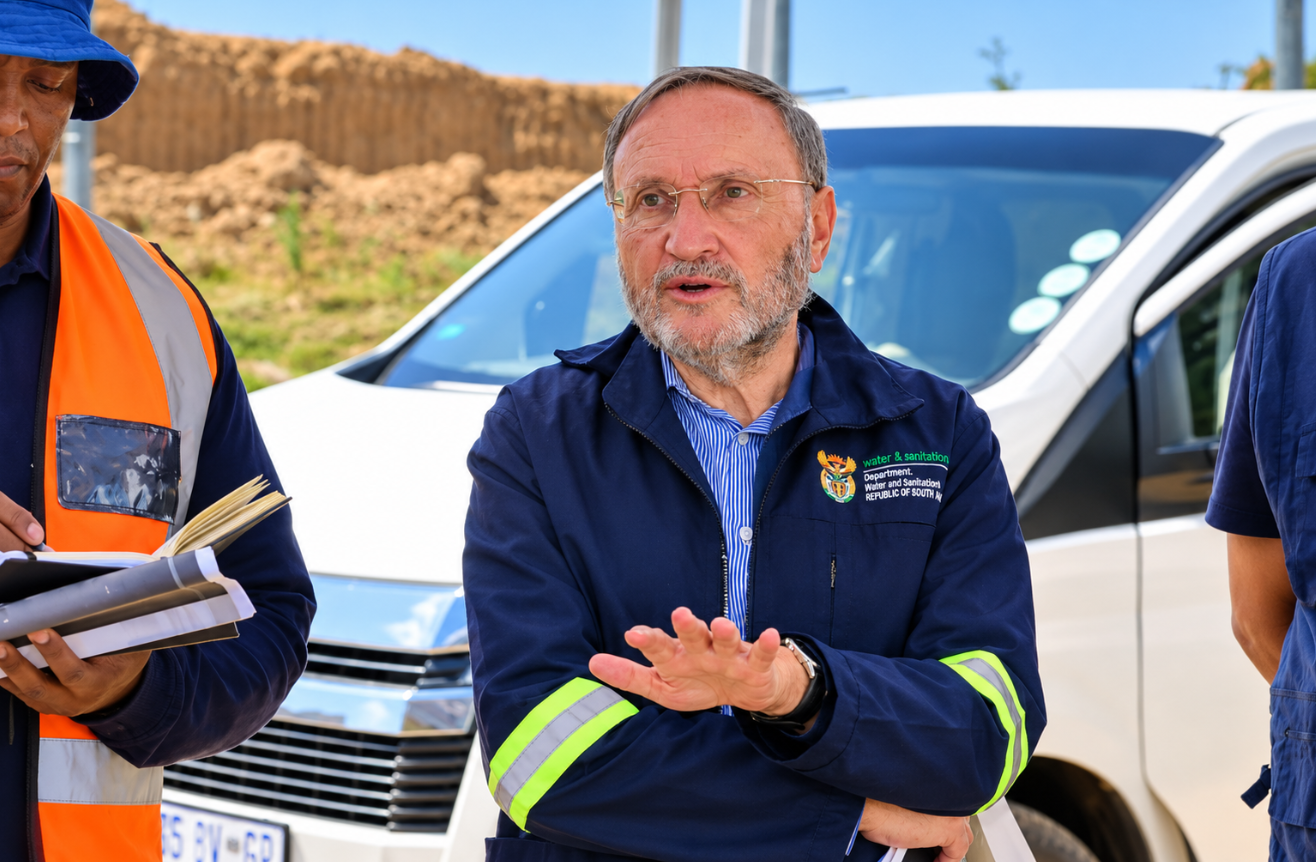
Water and Sanitation Deputy Minister Dr Jack Bloom raised the concerns during a visit to the Lion Park Pump Station on Friday, where he assessed the area's ongoing sewage challenges.
The pump station, funded by a property developer and commissioned in 2020, pumps sewage to the Northern Wastewater Treatment Works. However, operational failures have resulted in sewage pollution entering local rivers.
Hundreds of townhouse units have already been completed in the area, with a further 10,000 planned. The scale of the proposed development has raised concerns about whether existing water and sanitation infrastructure can cope with the anticipated population growth.
Bloom said Johannesburg officials had informed him that further developments had been put on hold until additional water becomes available through the Lesotho Highlands Water Project in 2028, as the city currently lacks sufficient supply to accommodate further expansion.
The visit also highlighted problems at the nearby Zandspruit 1 and 2 sewer pump stations, neither of which is currently operational.
The stations feed into the Inchanga Rising Main, which serves Cosmo City, Zandspruit, Bloubosrand and Northriding. Repeated bursts in the pipeline have resulted in sewage spills in surrounding areas.
“Johannesburg Water assured me that the most vulnerable section of the Inchanga Rising Main would be repaired by February next year, together with the Zandspruit pump stations. But these will be temporary measures, as the long-term solution is the construction of a new Lanseria Wastewater Treatment Works,” Bloom said.
He said the underlying problem was that wastewater treatment capacity had failed to keep pace with the rapid expansion of residential developments.
The Revised Compulsory National Water and Sanitation Services Standards, gazetted on 6 June 2025 in terms of Section 9 of the Water Services Act, 1997, prohibit municipalities from approving new developments where existing wastewater treatment capacity is insufficient to accommodate the additional sewage load.
“We cannot continue building thousands of new homes without ensuring that there is enough water to supply them and sufficient sewage capacity to dispose of the wastewater safely. The solution is for new developments to have on-site and water-efficient sanitation that is partially or completely off the municipal sewer network,” Bloom said.
He is advocating tax incentives to make decentralised sanitation systems more financially viable. He also urged municipal councils to consider revising tariffs to reflect the reduced treatment costs associated with developments using these systems.
According to Bloom, technological advances are making alternative wastewater treatment solutions increasingly affordable, potentially offering a more sustainable way to accommodate housing growth without adding to the burden on municipal infrastructure.
Illegal dumping adds to infrastructure burden
A further challenge facing Johannesburg's sewage network is the illegal dumping of building sand into sewer systems, which accelerates wear and tear on pumping equipment.
Bloom said Johannesburg Water spends approximately R1 million a month cleaning sand traps.
He called on the city to take stronger action against illegal dumping into sewer networks, including construction materials and other objects and substances such as shoes, tyres and oil being discarded through manholes.
Bloom said he would work with local ward councillor Sean Kreusch to engage developers and other stakeholders on sustainable wastewater treatment solutions that could support the area's rapid housing expansion without placing further pressure on existing infrastructure.
Source: SAnews