 View notices
Fuel relief as Treasury signals debt turning point
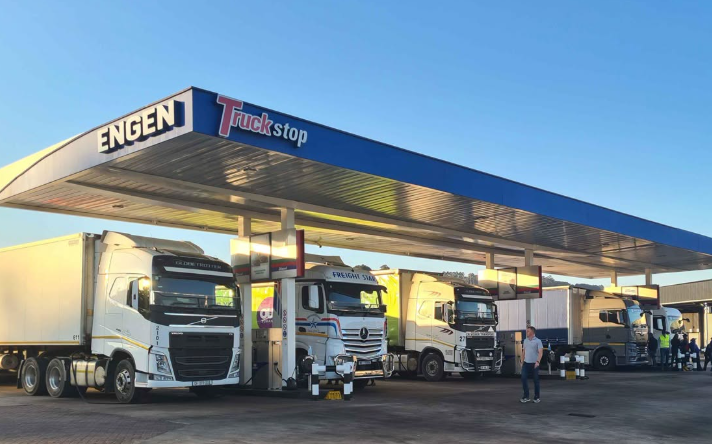
Finance Minister Enoch Godongwana has announced R10 billion in temporary fuel-levy relief as South Africa’s improving public finances create room to cushion households and businesses against rising energy costs.
Delivering the 2026 Medium-Term Budget Policy Statement in Parliament on Wednesday, Godongwana said government debt had stabilised, but warned that weak economic growth, global uncertainty and failing municipal services continued to constrain the country’s prospects.
The fuel levy will be reduced by R3 a litre for diesel and R1.50 a litre for petrol from 4 November until 1 December. Relief will then be scaled back to R1.50 a litre for diesel and R1 a litre for petrol until 5 January 2027.
The package will be funded by returning R10 billion previously transferred to the Central Energy Fund to the National Revenue Fund.
The reductions will soften fuel costs, although the eventual change in pump prices will also depend on international petroleum prices and the rand’s exchange rate.
Godongwana’s central fiscal message was that gross loan debt had stabilised at 78.4% of gross domestic product in 2025/26, marking the first such turning point in nearly two decades. Treasury now projects a gradual decline in the debt ratio.
According to the minister’s published speech, the budget deficit is expected to narrow to 4.3% of GDP in 2026/27, compared with February’s forecast of 4.5%, before reaching 2.5% by 2030.
The primary surplus, which measures revenue against spending before debt-service costs, is projected to increase from 1.7% of GDP this year to nearly 3% by 2030. However, the improved fiscal outlook comes alongside a weaker growth forecast.
Treasury now expects the economy to expand by 1.2% in 2026, down from the 1.6% projected in February. Growth is forecast to recover to 1.6% in 2027 and 2% by 2029.
Godongwana cited the Middle East conflict, disruption to oil supplies through the Strait of Hormuz, higher borrowing costs and risks associated with El Niño as threats to the outlook.
Stronger revenue collections have nevertheless provided some breathing room. Gross tax revenue for 2026/27 has been revised upwards by R17.1 billion, supported by corporate income tax, dividends tax and VAT receipts, with higher commodity prices contributing to the improvement.
Treasury has also identified R38.1 billion in additional savings over the 2027 medium-term expenditure framework, beyond the R12 billion announced in the February Budget. These include R13 billion from reducing social-grant fraud, R11.7 billion from lower-priority programmes and inefficiencies, R7.8 billion from the human settlements grant and R5.5 billion from public-entity surpluses.
Early retirement and voluntary exit packages in the public service are expected to save an average of R4.4 billion annually.
Health, education, social development, housing and basic services will continue to account for about 60% of non-interest expenditure. Allocations include R1.6 billion over the medium term for care before birth and during the first 1,000 days of life.
Municipal finances remain a major concern. An additional R21.8 billion will go towards the local government equitable share to help meet bulk-service costs, while a further R3.5 billion will support smart-meter installations.
Godongwana said Treasury had suspended the next equitable-share transfer to 69 municipalities that persistently failed to pay creditors. Of these, 37 subsequently adopted repayment plans, and R4.2 billion was paid to creditors.
Proposed changes to the Municipal Finance Management Act aim to enforce realistically funded budgets, strengthen revenue collection and allow earlier intervention in distressed municipalities.
Draft amendments to the Public Finance Management Act will also seek to clarify accountability and strengthen Treasury’s enforcement powers.
A proposed fiscal sustainability requirement would oblige each administration to set fiscal objectives, report on progress and explain deviations. Rather than imposing a fixed debt ceiling, the framework would embed fiscal discipline in law, with legislation expected before Parliament in 2027.
Infrastructure remains central to government’s growth strategy. The Infrastructure Finance and Implementation Support Agency is supporting projects with a potential investment value exceeding R207 billion, while 31 of the 68 projects in the public-private partnership pipeline are municipal.
The challenge is to translate the improving fiscal position into functioning infrastructure, reliable services and faster economic growth.
Sources: Enoch Godongwana, 2026 Medium-Term Budget Policy Statement speech, published by EWN, 21 October; Daily Maverick, budget coverage, 21 October.