 View notices
East Africa’s mountain glaciers set to vanish within years, climate scientist warns
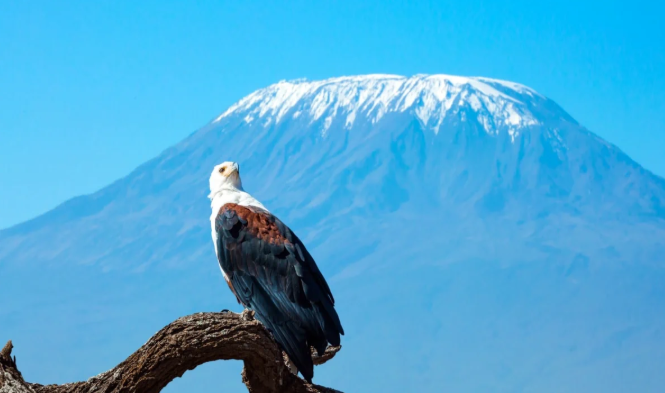
Mountain glaciers on three of East Africa's highest peaks – Mt Kenya, Kilimanjaro and the Rwenzori range – are on track to disappear entirely within years, according to the 2025 State of the Climate in Africa report.
The report estimates that ice cover on Mt Kenya, the continent's second-highest peak, has shrunk by 96% over the past 115 years, with the ice cap expected to vanish within three to five years, The Conversation reports.
Climate-glacier researcher Rainer Prinz explained that glacier ice forms over decades and centuries as snow accumulates faster than it melts. While East Africa's glaciers have grown and shrunk cyclically for millennia, the current retreat is unprecedented – the region lost 40-60% of its glacier area in the past decade alone.
Prinz said it is a common misconception that East Africa's glaciers function as significant water reservoirs. In reality, they are too small to meaningfully affect the water cycle, partly because tropical glacier ice sublimates directly into vapour rather than producing meaningful runoff, and partly because of their limited volume – Mt Kenya's glacier held roughly half a million cubic metres of ice in 2022, equivalent to a single rainfall event if melted and spread across the mountain. According to Prinz, East Africa's real water towers are its forests, not its glaciers.
Their true value, he said, is scientific: glaciers record long-term climate signals in a part of the atmosphere – the mid-tropical troposphere – where direct measurements are scarce. Research led by Prinz has found that the decline since the late 19th century stems primarily from reduced snowfall rather than rising temperatures directly. Less snowfall limits ice accumulation and darkens the glacier surface, reducing its ability to reflect sunlight. That decline in snowfall is itself driven by shifting sea surface temperature patterns in the Indian Ocean, which affect moisture transport toward East Africa and are influenced by broader climate change.
Prinz outlined several consequences of the glaciers' disappearance: loss of habitat for cold-adapted organisms such as certain algae and micro-organisms as other ecosystems move upward to replace them; the loss of East Africa's iconic snow-capped peaks, with likely knock-on effects for tourism; and the loss of rare tropical research sites, of which only a few remain worldwide, mainly in the South American Andes. He also noted the potential cultural and spiritual significance of the loss, given that glaciers are regarded in some local traditions as the dwelling places of spirits.
While glacier retreat is in principle reversible – Prinz noted a 40% increase in annual snowfall could stabilise Mt Kenya's glacier – he said current trends leave little hope for East Africa's glaciers to survive, since even wetter future climate scenarios are likely to bring temperatures too warm for sustained snow cover on the peaks.