 View notices
Durban port crisis triggers intervention by the Presidency
The situation prompted the matter to be escalated to President Cyril Ramaphosa’s office.
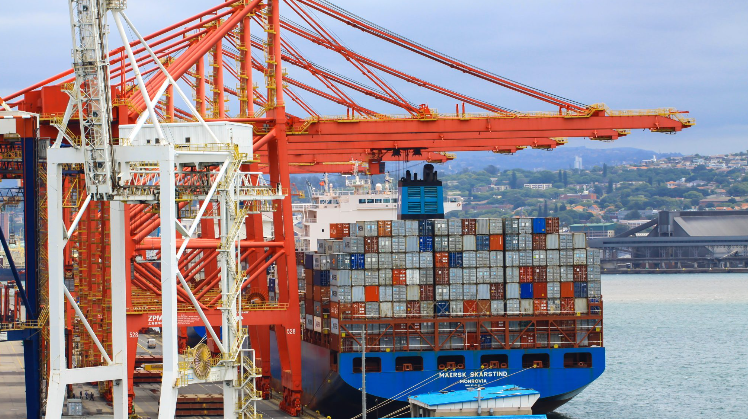
What was meant to be an improvement in throughput at the Port of Durban under new operator International Container Terminal Services Incorporated (ICTSI) has instead deepened into a full-blown operational crisis, according to Terry Hutson of Africa Ports & Ships.
The Southern African Association of Freight Forwarders (Saaff) has formally declared a crisis at the Durban Gateway Terminal (DGT), citing operational and equipment issues that have severely restricted cargo flow.
The situation, exacerbated by the transition to the terminal's new Navis N4 operating system, prompted Saaff to escalate the matter to President Cyril Ramaphosa's office.
In the clearest sign yet of the severity of the situation, a delegation from the Presidency subsequently visited the terminal to assess the issues, engaging directly with those on the ground and supporting the mobilisation of solutions.
The scale of the disruption is underlined by information circulated to customers by shipping line MSC, which has reported quay-crane breakdowns, shortages of straddle carriers, productivity averaging only around 20 moves an hour, and berthing delays of five to seven days on several services.
Hutson notes that these are no longer simply terminal-level problems, but now carry consequences for vessels, trucks, rail operators, cargo owners and freight forwarders – and, ultimately, for the wider South African economy.
Saaff is calling for coordinated intervention across all operations to restore fluidity, and has proposed solutions including improving equipment availability and communication across the logistics chain.
The association has stressed that costs arising from the delays should not be passed on to cargo owners or freight forwarders. It has also called for ongoing structures to prevent similar crises in future, with industry directly involved in planning rather than sidelined from it.
Saaff has said it has continued engaging directly with DGT and ICTSI terminal management as part of its intervention, alongside Transnet and wider port structures.
ICTSI does not appear to have issued a public comment on the current crisis.
The question now, as Hutson frames it, is no longer simply how DGT works its way through its current difficulties, but whether South Africa's new private-sector port operating model has sufficient early-warning, intervention and accountability mechanisms in place to stop a terminal-level problem from escalating into a national supply-chain crisis.