 View notices
DA and ActionSA unite in the Bay as Gauteng divisions persist
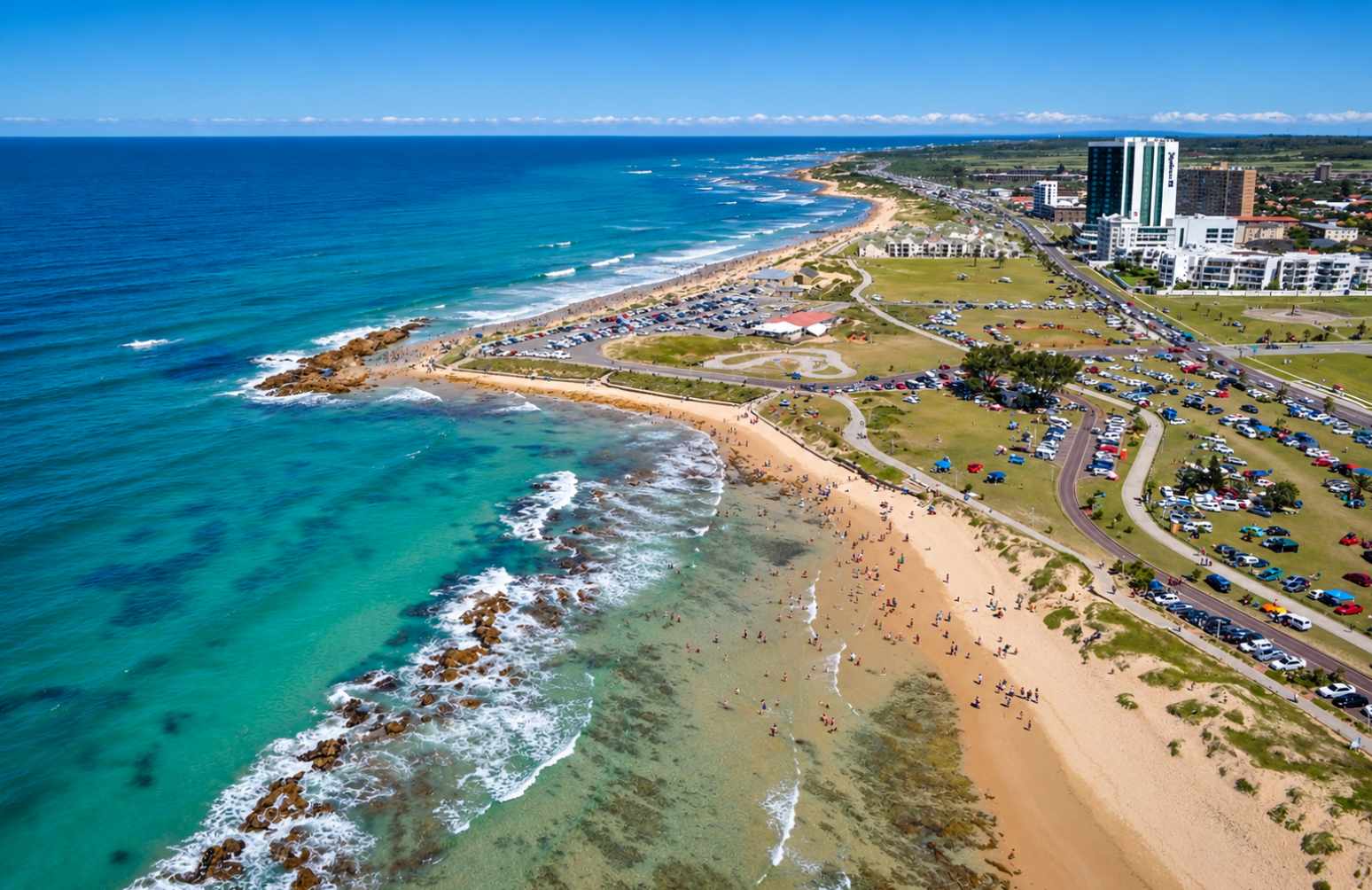
The Democratic Alliance (DA) and ActionSA have put aside their political differences to form a coalition government in Nelson Mandela Bay, despite failing to reach a power-sharing agreement in Gauteng’s three metropolitan municipalities.
The development highlights the increasingly divergent nature of municipal coalition negotiations across South Africa, with political parties opting for different governing arrangements in different parts of the country.
It also represents a breakthrough for the DA, which faces the prospect of being relegated to the opposition benches in Johannesburg, Tshwane and Ekurhuleni, despite emerging as the largest party in all three metros in the 4 November local government elections.
Asked why the ANC had been excluded from the governing arrangement in the metropolitan municipality bearing the name of one of its most revered leaders, the new coalition attributed much of Gqeberha’s governance and service delivery problems to the former governing party.
The six-party coalition includes the DA, ActionSA, Freedom Front Plus, United Democratic Movement, African Christian Democratic Party and Pan Africanist Congress.
Together, the parties command 63 of the metro’s 120 council seats, giving the coalition a narrow majority.
The DA secured 44.17% of the vote, winning 28 of the metro’s 60 wards and obtaining 53 council seats overall. The ANC, with 25.48% of the vote and 32 seats, had been in a position to assemble a rival coalition involving several smaller parties.
Former Nelson Mandela Bay mayor Retief Odendaal, who was removed through a motion of no confidence in 2023, is expected to return as executive mayor.
His anticipated return comes against a backdrop of chronic political instability in the Eastern Cape metro, where successive administrations have struggled to address deteriorating infrastructure, water and electricity supply problems, refuse removal and financial governance concerns.
IOL has described Nelson Mandela Bay as South Africa’s coalition failure capital, with governing arrangements having collapsed five times since 2016.
Speaking ahead of the coalition agreement, DA Eastern Cape leader Andrew Whitfield said lessons had been learnt from previous political fallouts and that greater emphasis would be placed on mutual trust and respect among coalition partners.
Political analyst Sandile Mnguni told IOL that residents would ultimately judge the incoming administration on its ability to deliver basic services, adding that urgent infrastructure repairs should be prioritised and realistic timelines communicated to residents.
Political stability in Nelson Mandela Bay is also of particular economic importance given the metro’s automotive manufacturing industry, port operations and the Coega Special Economic Zone.
A different political equation in Gauteng
In Gauteng, however, ActionSA appears poised to enter into governing arrangements with the ANC, Economic Freedom Fighters (EFF) and uMkhonto weSizwe (MK) Party, potentially shutting the DA out of the province’s three metropolitan administrations.
ActionSA rejected what the DA described as its final offer over the weekend, under which Dr Nasiphi Moya would retain the Tshwane mayoralty while the DA’s Helen Zille and Khathutshelo Rasilingwane would assume executive leadership in Johannesburg and Ekurhuleni respectively.
The proposed confidence-and-supply arrangement would have required ActionSA to support DA-led administrations in Johannesburg and Ekurhuleni without securing representation on their mayoral committees.
By contrast, negotiations with the ANC could see ActionSA secure two metropolitan mayoralties, with party leader Herman Mashaba returning as Johannesburg mayor and Moya retaining her position in Tshwane.
The ANC is expected to retain executive leadership in Ekurhuleni under the proposed arrangement.
Daily Maverick has also reported that MK could secure the deputy mayoralty in Johannesburg, while the ANC is seeking to retain control of the city’s strategically important finance portfolio.
Johannesburg’s 270 councillors, representing 21 political parties, were sworn in on Monday, but the inaugural council meeting was adjourned until Friday, 27 November, to allow further coalition negotiations.
Implications for the GNU
The contrasting political arrangements in Nelson Mandela Bay and Gauteng come as the DA continues to advocate a broader municipal cooperation agreement with the ANC, arguing that political stability at local government level could reinforce the Government of National Unity (GNU).
Under a national stability framework made public on Sunday, the DA proposed sharing executive leadership across 137 hung municipalities, with the ANC taking 93 mayoralties, the DA 24 and the Inkatha Freedom Party (IFP) 20, subject to the latter’s agreement.
The proposal also includes a conditional undertaking by the DA not to support a motion of no confidence in the national government or the dissolution of the National Assembly for at least 18 months.
However, the emergence of alternative coalition arrangements involving the ANC, ActionSA, MK and the EFF has raised questions about the extent to which cooperation between the two largest parties in the GNU can be replicated at municipal level.
For Nelson Mandela Bay, the immediate challenge will be whether its new six-party administration can survive a full five-year term, something that has eluded successive governing arrangements in the metro over the past decade.
Sources: IOL, Daily Maverick, ACCORD Coalitions Tracker, Reuters, TimesLIVE.