 View notices
COGTA pledges councils within two weeks of election results
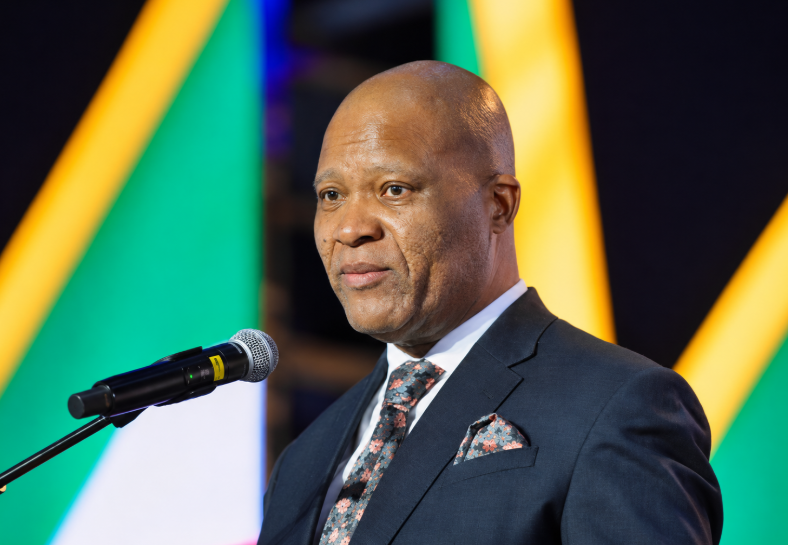
Newly elected councils in all 257 municipalities must meet and choose their leaders within a fortnight of the 2026 local government election results, and the department responsible says it is working with the provinces to make that happen.
This is according to deputy minister of Cooperative Governance and Traditional Affairs Namane Dickson Masemola, who was speaking on Sunday night after the results were announced at the National Results Operations Centre at the Gallagher Convention Centre in Midrand, Gauteng.
“The law dictates that within a period of 14 days we’ve got to ensure that formal municipal councils are convened and these councils are constituted legally as governing bodies of those 257 municipalities.
“This means that we'll have to work flat out to make sure that all those councils are formally constituted where they will elect mayors, speakers, [and] they will elect executive committees where executive mayors will be elected depending on the type of municipality,” he said.
He acknowledged that hung councils, where coalition talks are needed to form stable local governments, posed a challenge.
“There is a detailed timetable, but when you are managing a political situation, that timetable might work or might not work.
“For instance, these results are pointing to a very extraordinary phenomenon which has now become permanent in our municipal electoral democracy of hung councils, which necessitates coalition municipalities. Within this period, those political discussions ought to take place among various political parties to agree on how they are going to work together and constitute those municipal councils.
“Therefore, the timetable might be impacted, but whatever happens – notwithstanding these realities – within 14 days, these parties would have to agree on the proper ways and means of how they’re going to work together.”
Masemola also outlined a transition framework to help incoming leaders take office and keep municipalities running. Before the elections, municipalities were advised to prepare political and administrative reports, along with information packages for incoming councillors," he said.
“Part of the work is to make sure that once the councils are constituted, there is a process to hand over the reports from the previous leadership so that they account to the incoming leadership.
“They will have to make sure that administrative reports are handed over to the incoming leadership for them to know what is expected, and the third aspect would be what we called a very comprehensive package, which must then contain a lot of issues like budgets, audit plans, Integrated Development Plans (IDPs), service delivery budget implementation plans, codes of conduct, and audit reports,” Masemola said.
“Everything that goes with the state of the municipality so that the incoming leadership will be able to know where to start from here in terms of the budget, project implementation, outstanding decisions, appointment of staff, assessment of municipal managers, including to the extent that communities are supposed to be informed about the developments of these municipalities.”
He said key municipal operations would continue while the new councils convened to elect their leadership.
“Communities have voted and done all that was expected. Therefore, we in government, working with provinces and these newly elected councillors, in the next 14 days, communities must expect formal meetings, elections of mayors and speakers, and elections of executive committees. Communities must be settled.”
Masemola also sought to dispel misinformation about the post-election process.
“We need to clear this confusion. There are those who are peddling misinformation about the actual processes after these elections. Communities must be at ease that the processes are in good hands; there is no confusion,” he said.
He urged newly elected councillors to put citizens first and help build functional municipalities that support service delivery and economic growth.
“For South Africa’s economy to work, it needs functional municipalities, it needs decisive leadership, it needs well-oiled administrative capacity. Therefore, our theme is: Every Municipality Must Work. It is our theme for the next five years.
“If every municipality can work, it means people will have services and the economy will grow,” Masemola said.
Sources: SAnews, GCIS.