 View notices
Cape Town pilot’s capture exposes DRC military outsourcing
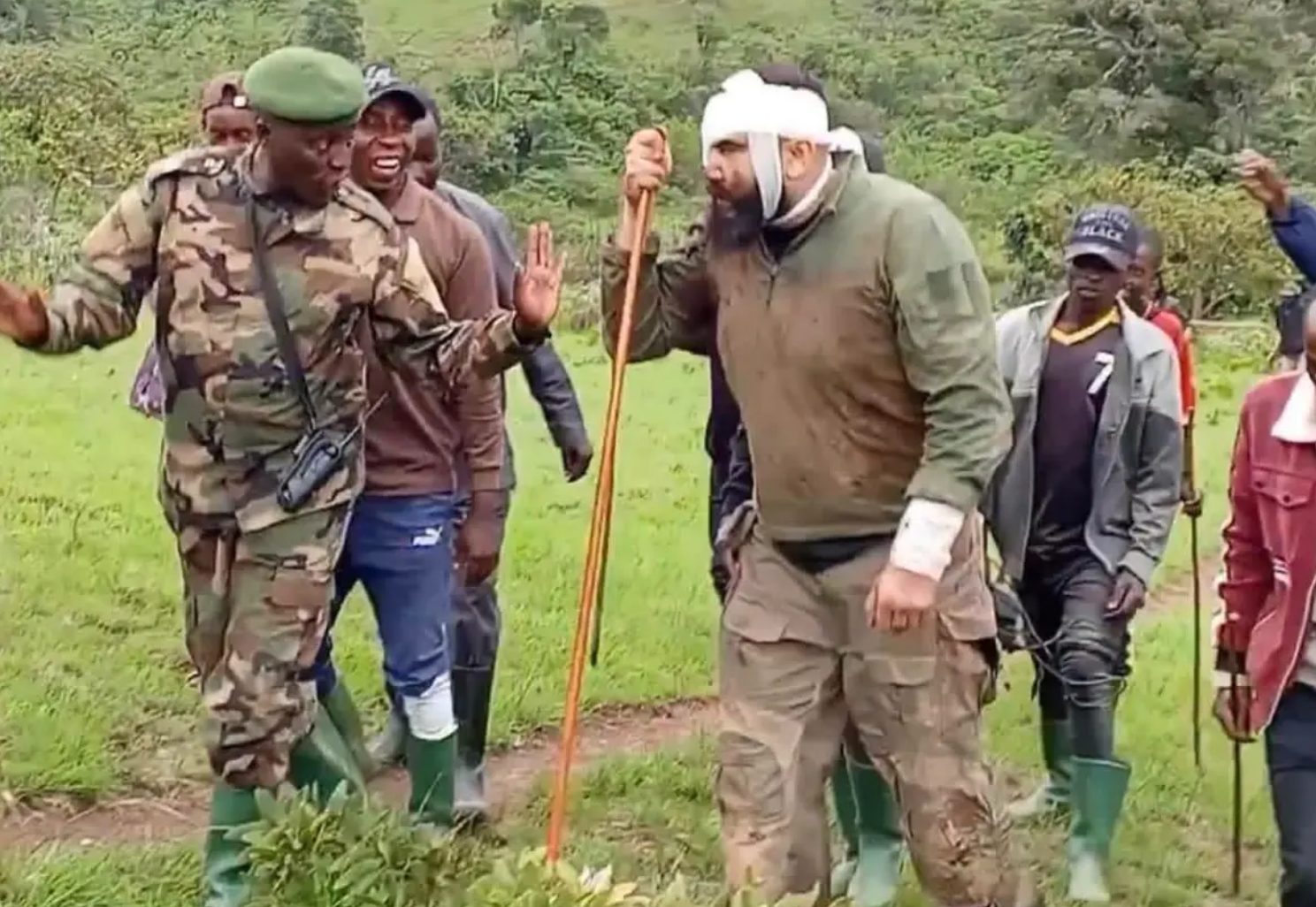
The reported capture of a local pilot by rebels in the eastern Democratic Republic of the Congo (DRC) has raised fresh questions about the growing privatisation of military operations in the Great Lakes region and the involvement of South African nationals in foreign armed conflicts.
The Department of International Relations and Cooperation (Dirco) is seeking clarity from authorities in Kinshasa following reports that Capetonian Alexander Villete was captured after his aircraft came down in South Kivu over the weekend.
According to Lenin Ndebele, reporting for the Mail & Guardian, Villete is a former commercial pilot and Grade II flight instructor previously associated with Morningstar Flight Academy and Westair Aviation in South Africa.
The Front pour la Refondation de la Nation (FRN), a rebel coalition associated with former Congolese president Joseph Kabila and incorporating the M23 rebel movement, has claimed responsibility for bringing down the aircraft.
FRN deputy spokesperson Oscar Balinda accused the pilot of participating in an aerial operation that damaged a referral hospital in the Minembwe highlands, serving a population of at least 80 000 people.
Villete was apparently admitted to the same hospital where the rebels were treating the injured South African, Balinda said.
Conflicting accounts have emerged about the circumstances surrounding the incident and the fate of the aircraft’s occupants.
While Balinda accused Villete of being a mercenary and the sole survivor after the aircraft came down, defence industry publication Military Africa reported that a Ugandan national had also survived and was being held by the rebels. This account aligns with other media reports.
The Congolese military, meanwhile, said it had lost contact with a cargo aircraft in poor weather. It has not been independently established whether the missing aircraft is the same one the rebels claim to have brought down.
Private military contractors
Rwandan publication The New Times has reported on allegations by investigative outlet Conspiracy Tracker Great Lakes that a privately operated aviation company has been providing military support to the Forces armées de la république démocratique du Congo (FARDC), the country’s national army.
The investigation alleges that Contractor Airways (Pty) Limited, reportedly associated with former United States Special Forces member Steven Patrick Shaulis and South African businessman Craig Barry Munro, has been providing aviation services in support of Congolese military operations.
The company’s alleged contractual involvement dates back to February 2025, according to Military Africa.
The allegations concerning the company, its principals and Villete’s operational responsibilities have not been independently substantiated by The Fiduciary Gazette.
Adding to the uncertainty surrounding the incident, the militaries of Uganda and Burundi have both denied involvement in the alleged aerial operation.
Burundi’s defence force said its troops deployed in the DRC under a bilateral agreement with Kinshasa were engaged in ground operations and did not have an aerial combat capability in the country.
Implications under South African law
Villete’s reported capture could have implications under South Africa’s Regulation of Foreign Military Assistance Act (Act 15 of 1998), which expressly prohibits mercenary activity and regulates the provision of military-related services abroad.
The legislation defines mercenary activity as direct participation in armed conflict as a combatant for private gain.
However, its provisions extend considerably beyond direct combat, covering various forms of military support, including logistics, intelligence, operational assistance, training and the procurement of equipment.
South African individuals and companies wishing to provide regulated foreign military assistance are generally required to obtain authorisation through a process involving the National Conventional Arms Control Committee (NCACC) and the Minister of Defence.
The legislation also provides for extraterritorial jurisdiction, meaning that offences committed beyond South Africa’s borders can be prosecuted domestically.
Parliament subsequently passed the Prohibition of Mercenary Activities and Regulation of Certain Activities in Country of Armed Conflict Act of 2006, intended to strengthen the regulatory framework. However, the legislation has yet to come into force.
It is not known whether Villete or the company for which he allegedly worked obtained the necessary authorisation from South African authorities, or whether the nature of his employment brought him within the scope of the legislation.
Kinshasa’s reliance on foreign contractors
The use of foreign military contractors by the Congolese government is not new. In January 2025, following the capture of Goma by M23 rebels, almost 300 foreign military contractors surrendered to United Nations peacekeepers before being repatriated through neighbouring Rwanda, Reuters reported at the time.
Many were Romanian nationals recruited to bolster the Congolese army’s military capabilities.
The deployment of private contractors has raised broader questions about accountability, the effectiveness of outsourced military operations and the legal responsibilities of foreign nationals involved in the conflict.
Security analysts quoted by Reuters following the fall of Goma identified shortcomings in co-ordination between private contractors and conventional military forces as a contributing factor to the difficulties experienced by Kinshasa.
Renewed diplomatic efforts
The reported capture of the South African coincided with renewed diplomatic efforts to address instability in the Great Lakes region.
Kenyan President William Ruto and his DRC counterpart, Félix Tshisekedi, met on Sunday in Oyo in the neighbouring Republic of the Congo for a four-nation summit hosted by President Denis Sassou Nguesso.
Togo’s leader, Faure Gnassingbé, the African Union’s appointed mediator for the eastern DRC conflict, also attended. According to a joint communiqué issued after the summit, Kenya and the DRC agreed to pursue the restoration of diplomatic relations, including the return of ambassadors, and strengthen co-operation through existing regional institutions.
Relations between Nairobi and Kinshasa have been strained since December 2023, when the Congolese government accused Kenya of providing a platform for political activities associated with armed opposition groups.
Kenya has denied interfering in the DRC’s internal affairs. The leaders also called for greater regional co-operation in combating Ebola, amid concerns that continued fighting in the eastern DRC is compromising healthcare provision and efforts to contain the disease.
For Pretoria, the immediate priority remains establishing the circumstances of Villete’s capture, his medical condition and the nature of his involvement in the conflict.
Sources: Mail & Guardian, Military Africa, The New Times, The Detail, Rwanda News Agency, Operativ Media, Reuters, Daily Maverick, Daily Nation, Oyo summit joint communiqué.