 View notices
Rand firmer and gold off one-year low as oil slides on hopes of Iran deal
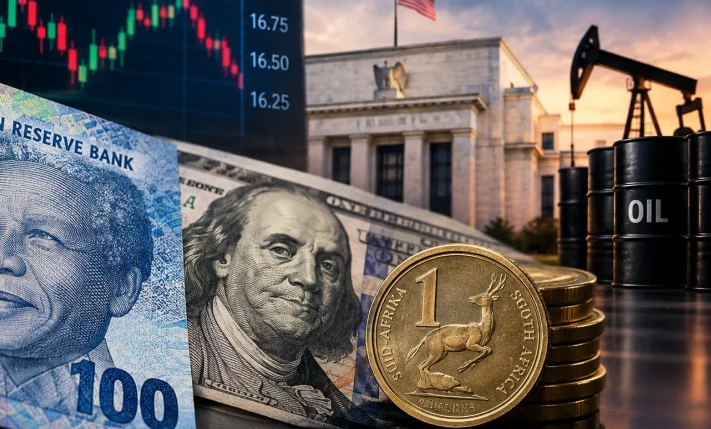
The rand edged stronger and Johannesburg shares rose on Monday as a sharp fall in oil prices, on hopes of a deal to end the war with Iran, outweighed a wobbly session on Wall Street.
The rand traded at about R16.64 to the dollar by mid-afternoon, roughly 0.4% firmer on the day. The JSE Top-40 gained about 1% and the yield on the benchmark 2035 government bond eased to 8.565%. Domestic sentiment was helped by a second monthly improvement in manufacturing confidence in October. Absa, which sponsors the survey, said weak demand and logistics bottlenecks meant the improvement was only marginal.
On Wall Street, the Nasdaq fell about 1% in the first session of November as technology shares were sold again. The S&P 500 lost 0.5% while the Dow gained 0.4%, with financials and consumer discretionary stocks leading. Energy shares dropped about 4% as crude fell. The US Federal Reserve held rates at 3.75% to 4% last week, with two members dissenting in favour of a hike after September’s increase. Chair Kevin Warsh noted that energy prices had moved higher again, and traders are weighing whether oil is feeding inflation and the rate outlook.
Gold recovered from a one-year low on Monday, with spot bullion back above $3,900 an ounce as lower oil eased worries about inflation and further rate rises. It was trading around $3,920 on Tuesday, down about 0.7% on the day and more than 5% over the month, but roughly level with a year ago. That is about R65 000 an ounce at current exchange rates. Silver dipped below $50 an ounce before steadying near $50.64.
Brent crude fell sharply. The January contract settled at $104.77 a barrel on Monday, down 7.63%, with West Texas Intermediate at $96.46. It was little changed on Tuesday. Part of the apparent drop reflects the benchmark rolling from the expiring December contract, which settled at $117.64 on Friday, within a dollar of March’s wartime closing high. Brent rose more than 13% in October.
Iranian and Qatari officials held three days of talks in Doha. Iran said it could reopen the Strait of Hormuz within two days if Washington ends its naval blockade, lifts oil sanctions and halts the war on all fronts. The negotiators left Doha on Sunday without a breakthrough, but a draft proposal is circulating. Iranian president Masoud Pezeshkian said Supreme Leader Mojtaba Khamenei had given the government certain powers to negotiate. Donald Trump said Iran wants a settlement as soon as possible and that a deal could happen.
Trump has said the US will not launch new attacks before today’s midterm vote, but has not ruled out action afterwards. Secretary of state Marco Rubio said no decision had been taken. Axios reported that Israeli prime minister Benjamin Netanyahu was pressing Trump to strike immediately after the election, which Israel denied.
The risks remain. Tanker attacks around the Gulf and Hormuz have continued during the eight-month war, which began with US-Israeli strikes on Iran in late February. The Houthis have claimed attacks on Saudi refineries, and European gas prices have topped €100 a megawatt-hour for the first time since 2022. South Africa imports most of its fuel, so oil is a key channel through which the conflict reaches the rand and domestic inflation.
Sources: Reuters, CNBC, CBS News, Bloomberg, Dawn, Business Recorder, Petroleum Economist, Trading Economics, Goodreturns, 24/7 Wall St.