 View notices
Markets Wrap: Rand steady near six-month best as global bond yields rattle equities
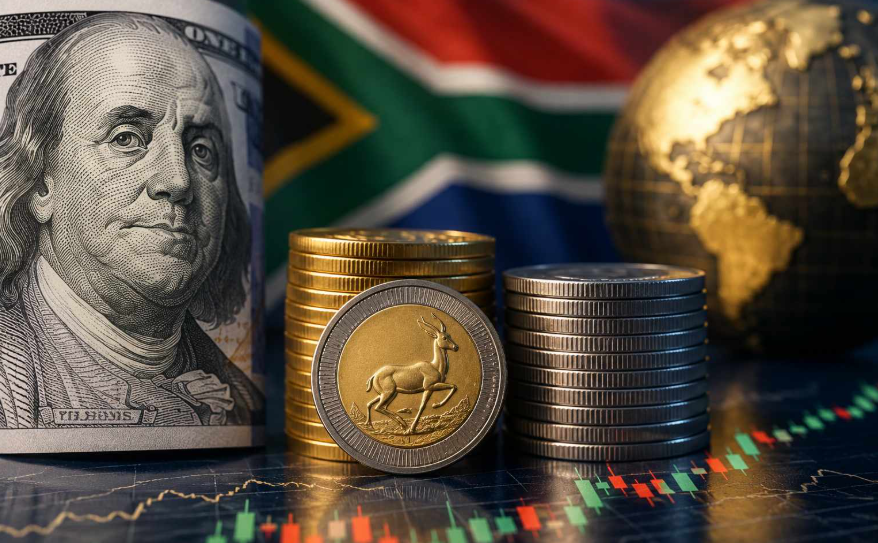
The rand held firm around R16.14–R16.26 to the dollar on Wednesday, close to its strongest level since early March, as a subdued greenback and easing Fed rate-hike bets continued to support the local currency.
The rand has strengthened 1.58% over the past month and is up 7.95% over the past year. Traders remained cautious, however, with attention turning to South Africa's July inflation data, due Wednesday, for further clues on the Reserve Bank's rate path.
Headline inflation is expected to moderate to 4.5% from June's 5%, still above the Reserve Bank's 3% target, aided by softer oil prices following the partial reopening of the Strait of Hormuz. The SARB unexpectedly held rates steady on 23 July after raising them in May, and has flagged upside inflation risks linked to the Middle East conflict.
The FTSE/JSE All Share opened at around 114,673 points on Wednesday, trading within a range of roughly 114,343 to 114,872 – still comfortably within its 52-week range of 100,433 to 129,339, reflecting a 13.33% gain over the past year.
Wall Street
US equities pulled further back from last week's record high on Tuesday, as a renewed sell-off in AI and semiconductor stocks weighed on sentiment. The S&P 500 fell 0.7% for a third straight session of losses, the Dow Jones Industrial Average dipped 0.2%, and the Nasdaq Composite dropped 1.3%, with a closely watched semiconductor gauge sliding 5.5%. Rising government bond yields were the dominant theme, with the 30-year Treasury yield hovering near its highest level in nearly two decades amid concerns over persistent inflation and elevated oil prices tied to the ongoing US–Iran standoff over the Strait of Hormuz.
Europe
European markets closed broadly lower on Tuesday. The FTSE MIB fell 1.06%, the DAX dropped 0.80%, and the CAC 40 slipped 0.77%, while London's FTSE 100 bucked the trend to close 0.14% higher.
Asia-Pacific
Asian markets extended the sell-off into Wednesday trade. Japan's Nikkei 225 tumbled around 2.6%, South Korea's Kospi shed a sharp 5.63%, and China's Shanghai Composite fell nearly 2%, weighed down heavily by a broad semiconductor rout as chipmakers came under pressure worldwide amid surging bond yields. Hong Kong's Hang Seng was a rare bright spot, edging up 0.13%. India's Sensex and Nifty opened largely flat, with IT stocks rallying against otherwise weak global cues.
Commodities
Brent crude extended its gains for a fourth consecutive session, trading near $91 a barrel, while US benchmark West Texas Intermediate rose to around $85 a barrel, as the market-opening memorandum of understanding between the US and Iran expired on Monday without a resolution over control of the Strait of Hormuz.
Gold traded below $4,350 an ounce on Wednesday, having dropped nearly 2% in the previous session, pressured by elevated global bond yields and persistent inflation concerns – even as the metal continues to draw support from strong investment demand and ongoing central bank buying, particularly from China. Markets now await minutes from the Federal Reserve's July meeting, along with remarks from Fed chair Kevin Warsh at the Jackson Hole symposium, for fresh clues on the policy outlook.