 View notices
Markets: Rand holds steady as oil surges and global shares retreat
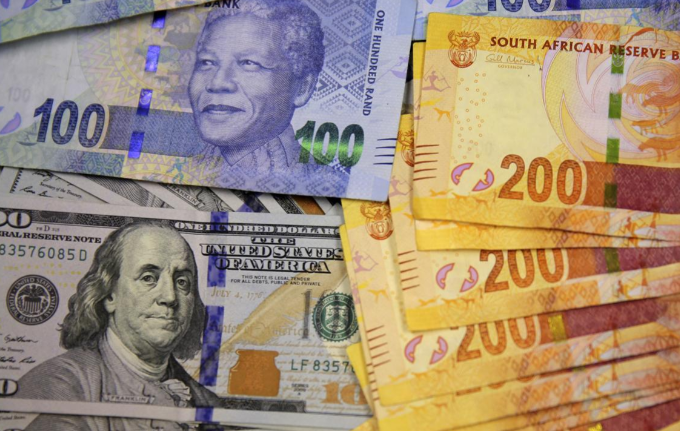
The rand remained relatively stable against the US dollar on Thursday morning, despite renewed pressure on global financial markets as oil prices surged and concerns over government debt unsettled investors.
Reuters reported that the South African currency traded at approximately R16.64 to the dollar in early dealings, compared with its previous close of R16.63.
The local currency was supported by a relatively subdued dollar ahead of domestic manufacturing figures, with economists expecting August factory output to have increased by 0.6% year on year, down from July’s 1.1% growth.
Nedbank economists warned that South Africa’s manufacturing sector remained vulnerable to high input costs, rising fuel prices and supply constraints.
On the Johannesburg Stock Exchange, market data published by Mansa Markets indicated that the JSE All Share Index had advanced 0.51% to 108,881.47 points in early Thursday trading.
International markets, however, were under renewed pressure.
Reuters reported that European shares declined as rising sovereign borrowing costs and higher energy prices undermined investor confidence. The pan-European STOXX 600 fell approximately 1%, while France’s CAC 40 also lost ground amid concerns over the country’s public finances.
Asian markets were similarly affected, with Japan’s Nikkei declining 1.4% and South Korea’s benchmark index losing 2.6%. US stock futures pointed towards a weaker Wall Street opening.
Oil was a major concern for investors. Brent crude climbed to approximately $105.20 a barrel by 10:41 GMT, while US West Texas Intermediate reached $92.75, according to Reuters.
The increase followed renewed attacks on shipping in the Gulf and Strait of Hormuz, compounded by disruptions to American offshore production as Hurricane Isaias approached the Gulf of Mexico.
Gold, meanwhile, recovered modestly to approximately $4,136 an ounce after recent pressure from rising bond yields.
Investors were also assessing the prospect of further US interest rate increases after minutes from the Federal Reserve’s September meeting indicated that policymakers remained divided over the need for additional tightening.
For South Africa, the combination of higher international oil prices, uncertain global interest rates and weak domestic industrial activity presents a difficult economic outlook, particularly following this week’s substantial increases in petrol and diesel prices.
Sources: Reuters, Mansa Markets and Nedbank economic commentary, 8 October 2026.