 View notices
Global bond selloff sends yields to their highest since 2008
A sharp selloff in government bonds has pushed yields around the world to levels not seen in more than a decade, as renewed Middle East hostilities and hawkish signals from the US Federal Reserve combine to unsettle fixed-income markets.
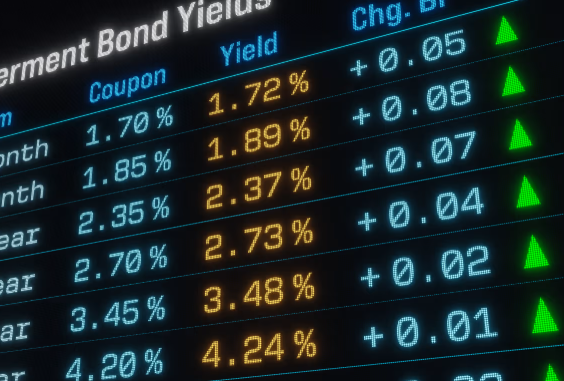
A Bloomberg gauge of global government debt has risen for four consecutive sessions, reaching 3.72% on Monday – its highest level since mid-2008. The moves have been especially pronounced at the long end of the market: the 30-year US Treasury yield climbed to 5.333%, its highest since 2007, while the benchmark 10-year US yield reached 4.748%, a level last seen in January last year.
France's 30-year yield hit its highest point since 2008, Germany's 10-year Bund touched levels last recorded in 2011, UK 30-year gilts approached 6%, and Japan's 10-year yield reached a three-decade high.
Two developments have driven the latest leg of the selloff. Federal Reserve chair Kevin Warsh used a speech at Jackson Hole to reaffirm his commitment to bringing down inflation that has now run above the central bank's target for five consecutive years, reinforcing market expectations of further rate increases.
At the same time, the breakdown of a ceasefire framework between the United States and Iran has raised fresh concern about prolonged disruption to oil flows through the Strait of Hormuz, pushing Brent crude above $91 a barrel and adding to inflation worries.
Analysts note the selloff also reflects longer-running concerns that predate the current bout of volatility.
Dan Coatsworth, head of markets at AJ Bell, has said that rising long-dated yields can reflect concerns about high levels of government borrowing, with investors demanding greater compensation for holding long-dated sovereign debt — a dynamic distinct from short-term inflation expectations.
Deutsche Bank strategist Jim Reid has said there is no single catalyst behind the latest leg of the selloff, pointing instead to the lack of progress in US-Iran talks and a market now pricing in a more extended closure of the Strait of Hormuz.
Idanna Appio, a portfolio manager at First Eagle Investments, has said markets are pricing in a higher path for short-term rates both in the US and globally. Separately, Saxo Markets strategist Neil Wilson has warned that the rise in yields could increasingly threaten equity valuations and add to the difficulties facing heavily indebted governments. Rising government borrowing, persistent budget deficits and heavy debt-servicing costs – US annual interest payments alone now exceed $1 trillion – have made investors increasingly demanding of compensation for holding long-dated sovereign debt, a dynamic distinct from short-term inflation expectations. Real yields on 30-year US inflation-linked bonds have approached their highest levels in around 18 years, even as broader inflation expectations have remained comparatively stable.
The rise in yields is being felt beyond bond markets. Because yields on instruments such as the 10-year Treasury help set borrowing costs for mortgages, vehicle finance and business loans, the selloff threatens to make credit more expensive across the economy. It has also weighed on equities, with higher yields drawing some investors away from stocks and complicating valuation models that depend on discounting future earnings. US indices have closed lower in the sessions since the selloff intensified.
SOURCES: Bloomberg, CNN Business, World Economic Forum.