 View notices
AGOA blow deepens pressure on Cape exporters
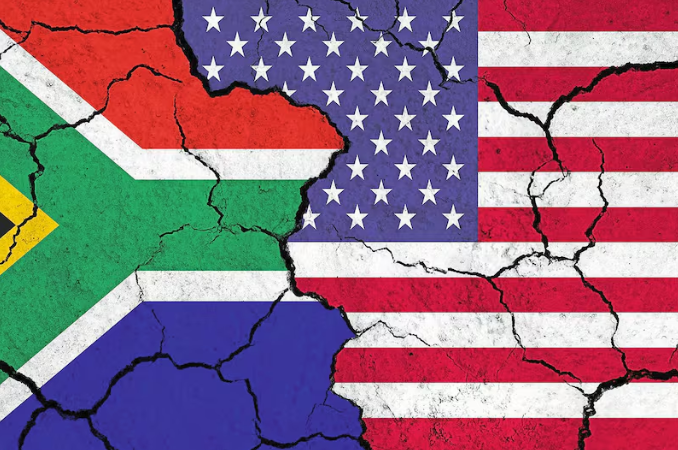
South Africa’s impending loss of preferential access to the United States market threatens to compound a sharp decline in Western Cape exports, putting further pressure on businesses and jobs.
The warning by Exporters Western Cape (EWC) was issued after President Donald Trump notified Congress and the governments of South Africa and Rwanda on Monday, 2 November, of his intention to terminate both countries’ eligibility under the African Growth and Opportunity Act (AGOA).
The termination will take effect on 1 January 2027.
US Trade Representative Jamieson Greer said the decision followed an annual eligibility review. Washington cited barriers to American trade and investment, corruption and threats to US national security and foreign policy interests among its concerns about South Africa.
EWC chairman Terry Gale said the immediate priority was helping exporters retain their American customers.
“The time to do anything about this has passed. This is going to have a negative impact on our exporters and South Africa can ill afford it. Our economy needs every export market and every job it can hold on to,” he said.
According to figures supplied by EWC, Western Cape exports to the US support approximately R12.98 billion in provincial GDP, 11,914 direct jobs and 35,467 indirect jobs. These figures reflect the province’s broader US export exposure, rather than jobs necessarily dependent on AGOA preferences.
The organisation said the value of provincial exports to the US had already fallen 41%, from R16.89 billion in the 12 months to July 2025 to R10.02 billion in the corresponding period to July 2026.
Fruit juice exports dropped 86% to R136.7 million, while grape exports declined 79% to R91.1 million. Yacht exports fell 55% to R627.6 million, wine exports decreased 38% to R371.5 million and citrus exports declined 17% to R1.82 billion.
These declines preceded the latest announcement, but illustrate the pressure exporters were already facing.
“We can’t afford to see our trading relationships weakened, least of all with the US. Businesses have spent years building relationships with American customers and investing in the capacity to supply them. Losing preferential access puts those investments under pressure,” Gale said.
The national impact will vary considerably between products. Reuters reported that South Africa exported about $1.7 billion in goods under AGOA in 2025, representing approximately 10% of its exports to the US and 1% of its global exports. Losing the preferences would raise duties on affected products rather than prohibit trade with American customers.
Trade, Industry and Competition Minister Parks Tau said government would support affected sectors and continue pursuing trade and investment opportunities with the US. Pretoria acknowledged the 60-day advance notice period and said it remained committed to finding a solution through engagement.
Gale called for clear guidance for businesses negotiating orders extending into 2027, including how changes would affect pricing and competitiveness.
“Government needs to work with affected industries to establish where the greatest exposure lies and how businesses can be helped to retain their customers. Exporters need to understand what this means for their products while they still have time to discuss arrangements with their buyers.”
Although alternative markets remained essential, he cautioned against treating diversification as an immediate remedy.
“Finding another market is not something an exporter can do overnight. Building relationships with new buyers takes time. There may also be regulatory requirements that cannot be met immediately, particularly by smaller businesses with limited resources.” He said improving logistics reliability and reducing avoidable domestic costs would help exporters compete under increasingly difficult conditions.
“Businesses need to know what changes from January and what support will be available. The priority must be to help them continue trading, because lost orders ultimately put jobs at risk.”
Sources: EWC press statement; US Trade Representative, 2 November 2026; SAnews, 3 November 2026; Reuters, 2 November 2026.