 View notices
AfCFTA seals $3.1bn deal to modernise customs across Africa
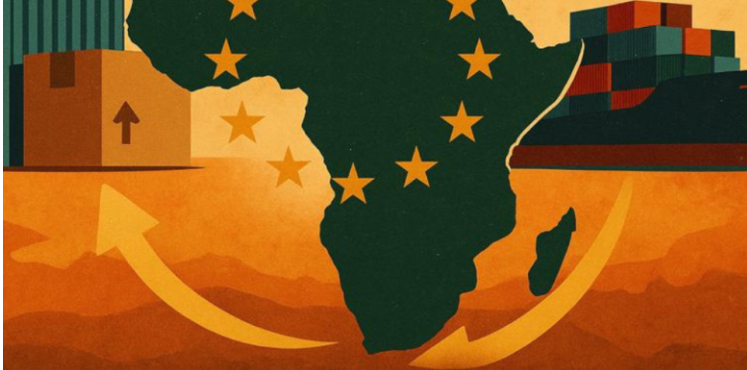
The African Continental Free Trade Area (AfCFTA) has signed a 20-year, $3.1-billion concession agreement with Nigerian firm Bergmans Security Consultants and Supplies Ltd to digitise and harmonise customs systems across as many as 50 African countries, including the whole of the SADC region.
Announced in early August, the deal – known as the AfCFTA Customs Modernisation Project (ACMP) – covers all 55 AfCFTA member states, with a particular focus on the roughly 50 that have ratified the agreement.
Under the public-private partnership, Bergmans will finance, build and maintain the infrastructure over two decades, recouping its investment through revenue-sharing arrangements rather than upfront government funding.
The project is aimed squarely at the non-tariff barriers – rather than tariffs themselves – that traders and freight operators most often cite as obstacles to intra-African trade. Planned elements include digital, multilingual customs portals for data exchange between national administrations; coordinated border management and One-Stop Border Posts; electronic cargo tracking and modernised transit regimes; non-intrusive inspection technology and risk-based analytics; and harmonised procedures across participating states. An initial rollout is expected in at least six countries, though which ones have not yet been disclosed.
The initiative complements moves already under way at national level to align customs practice with World Trade Organization standards. Kenya's Revenue Authority, for instance, has reaffirmed that it values imports according to the WTO Customs Valuation Agreement, even as it introduces new risk-based minimum yields for consolidated cargo. More broadly, the ACMP's approach – pre-arrival processing, electronic payments, risk management and single-window-style data exchange – closely mirrors the WTO's Trade Facilitation Agreement.
The scale of the challenge is visible in current bottlenecks: continuing congestion at the port of Mombasa, a new requirement from 1 September for carriers to verify Advance Cargo Declarations before loading Kenya-bound containers, mandatory pre-lodgement of customs declarations in Botswana, and persistent delays at West and Central African ports including Tema, Abidjan and Conakry.
Because the concession spans the full AfCFTA membership, southern African trade routes fall within its scope. All SADC states that are AfCFTA parties – among them South Africa, Botswana, Namibia, Zimbabwe, Mozambique, Zambia, Malawi, Tanzania, Angola and the Democratic Republic of Congo – are covered, and the project's planned tools map onto key regional corridors such as Beitbridge, Kasumbalesa, Chirundu and the Walvis Bay–Zambia–DRC route. Not yet clear is which SADC borders will be prioritised first, or how the new platform will work alongside existing national systems such as South Africa's SARS, Zimbabwe's ZIMRA or Botswana's BURS.
For businesses moving goods across the continent, the changes are expected to cut dwell times and informal payments over time, and to support more predictable clearance through risk-based, WTO-aligned processes.
Reliable transit and tracking systems could also make regional supply chains easier to run. At the same time, new requirements around pre-lodgement, documentation and data quality may raise the compliance bar in ways that favour larger, better-resourced operators unless smaller traders receive dedicated support. The 20-year concession to a single private provider has also raised governance questions – around data sovereignty, competition and long-term cost – that trade bodies and legislatures are likely to scrutinise.
By March this year, more than 12,000 AfCFTA certificates of origin had already been issued, pointing to growing but still early-stage use of the bloc's preferential tariffs. The customs modernisation project represents the next stage of that process: converting tariff preferences into faster, cheaper and more reliable border crossings.
SOURCES: Reuters, IntelliNews, AfCFTA Secretariat.