 View notices
Ramaphosa faces crucial court ruling over Phala Phala impeachment
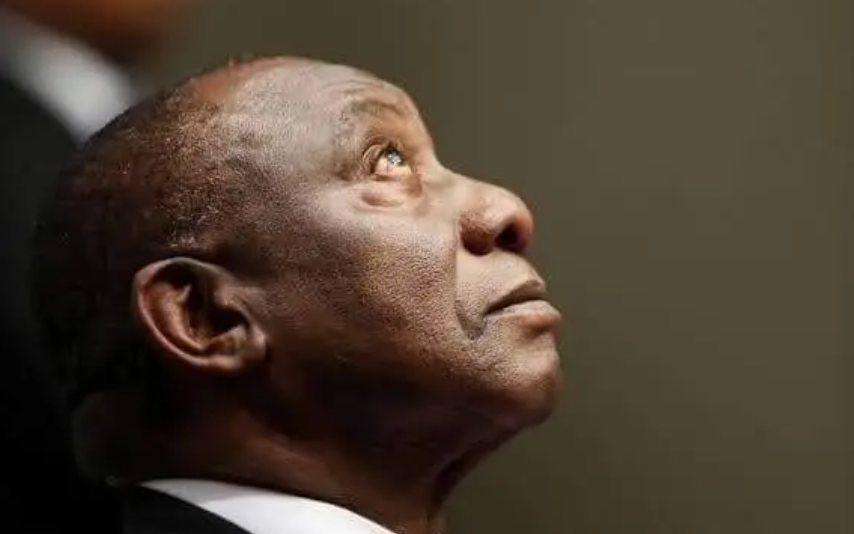
President Cyril Ramaphosa is due to learn on Wednesday whether his legal challenge to the independent panel report that triggered parliamentary impeachment proceedings against him has succeeded, in a judgment that could have far-reaching political and constitutional consequences.
The Western Cape High Court reserved judgment on 4 September after hearing arguments in Ramaphosa’s application to have the Section 89 independent panel report into the Phala Phala affair reviewed and set aside.
The report, released in November 2022, found that there was prima facie evidence that Ramaphosa may have committed serious violations of the Constitution and the law, as well as serious misconduct.
The findings arose from the theft of about $580,000 in foreign currency from his privately owned Phala Phala game farm in Limpopo in February 2020, an incident that only became public more than two years later.
The controversy erupted in June 2022 when former State Security Agency director-general Arthur Fraser laid criminal charges against Ramaphosa, alleging that the theft had been covered up and that an unofficial investigation had been conducted to recover the money.
The independent panel, chaired by former Chief Justice Sandile Ngcobo and comprising retired judge Thokozile Masipa and advocate Mahlape Sello, was subsequently appointed to determine whether there were sufficient grounds for Parliament to institute impeachment proceedings.
Its findings centred on four possible grounds for impeachment:
-
A serious violation of Section 96(2)(a) of the Constitution, which prohibits members of the executive from undertaking other paid work.
-
A possible violation of Section 34(1) of the Prevention and Combating of Corrupt Activities Act, which imposes an obligation to report certain crimes.
-
Serious misconduct arising from an alleged conflict between Ramaphosa’s official responsibilities and private business interests.
-
Serious misconduct relating to the alleged misuse of his position as head of state in the investigation of the theft.
The panel’s findings did not constitute a determination of guilt but were intended to establish whether further parliamentary investigation was warranted.
During the September hearing, Ramaphosa’s legal representative, advocate Wim Trengove SC, argued that the panel had failed to adequately interrogate the allegations against the president or properly weigh his submissions against those made by Fraser.
Trengove maintained that the president had acted in good faith and that the panel had misinterpreted the National Assembly’s rules governing impeachment.
Opposing the application, advocate Dali Mpofu SC, representing the MK Party, questioned the jurisdiction of the High Court to entertain the review.
Opposition parties have argued that the appropriate forum for testing the allegations is Parliament’s impeachment committee and that judicial intervention at this stage risks undermining Parliament’s constitutional oversight responsibilities.
Parliamentary accountability
On 8 May this year, the Constitutional Court overturned the National Assembly’s December 2022 decision to reject the panel’s report, following a legal challenge brought by the Economic Freedom Fighters.
At the time of the original parliamentary vote, the ANC still enjoyed an outright majority in the National Assembly, enabling it to block the initiation of impeachment proceedings.
The political landscape has since changed considerably, with the ANC losing its parliamentary majority in the 2024 general election and subsequently entering into a Government of National Unity (GNU).
The Constitutional Court’s ruling resulted in the establishment of a 31-member impeachment committee representing 16 political parties, chaired by ActionSA MP Makashule Gana.
However, on 24 July, Ramaphosa secured an interim interdict preventing the committee from conducting public hearings pending the outcome of his review application.
The committee has nevertheless been permitted to continue with preparatory work.
Previous investigations
Ramaphosa has consistently denied wrongdoing, maintaining that the foreign currency stolen from Phala Phala was received from a Sudanese businessman in connection with the purchase of buffalo.
Several separate investigations have already been conducted into aspects of the controversy.
In March 2023, the South African Revenue Service confirmed that Ramaphosa and his farming businesses were tax-compliant.
The Public Protector subsequently cleared Ramaphosa of alleged violations of the Executive Ethics Code investigated in its Phala Phala inquiry.
In August 2023, the South African Reserve Bank also announced that it had found no exchange control contravention by Ramaphosa or the farming entity concerned in connection with the transaction, concluding that the sale had not been finalised.
These findings do not, however, dispose of the separate constitutional questions raised by the independent panel.
Political implications
Should the High Court dismiss Ramaphosa’s application, Parliament’s impeachment committee could proceed with public hearings, subject to any further legal challenges or court orders.
Even a ruling in the president’s favour would not necessarily bring the matter to an end.
During the September hearing, Trengove acknowledged that setting aside the report could return the matter to Parliament, which would then have to decide whether to appoint a new independent panel.
Under Section 89 of the Constitution, the removal of a sitting president requires a resolution supported by at least two-thirds of the members of the National Assembly, on grounds of a serious violation of the Constitution or the law, serious misconduct or an inability to perform the functions of office.
With 400 seats in the National Assembly, at least 267 MPs would have to support such a resolution.
Wednesday’s judgment therefore has implications not only for Ramaphosa’s political future but also for relations between parties in the GNU, already under pressure from disagreements over power-sharing arrangements at municipal level.
It could also have significant implications for the relationship between the judiciary and Parliament, particularly regarding the extent to which courts may intervene in parliamentary processes intended to hold a sitting president accountable.
Sources: eNCA, The Citizen, SABC News, Eyewitness News, Daily Maverick, Parliament of South Africa – Section 89 inquiry, Western Cape High Court judgment, 24 July 2026 – SAFLII.