 View notices
Tongaat’s exit deepens JSE’s annus horribilis as listings dry up
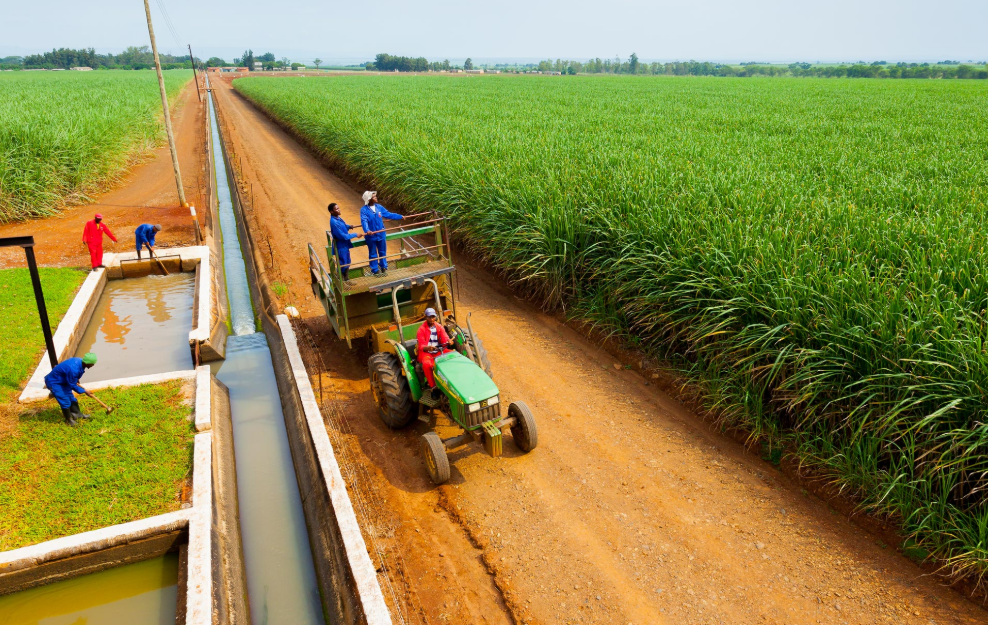
The Johannesburg Stock Exchange (JSE) is heading towards one of its weakest years for new listings in more than three decades, with the impending departure of Tongaat Hulett bringing the number of companies leaving the bourse in 2026 to 13, against just two new listings.
The troubled sugar producer is scheduled to cease trading on 3 November, ending a 74-year association with the exchange and adding to concerns about the shrinking number of publicly traded South African companies.
Ed Stoddard, writing for Daily Maverick, reported that the JSE had decided to remove Tongaat's listing following a prolonged trading suspension and the absence of any realistic prospect of the company restoring compliance with the exchange's requirements.
The company has also acknowledged that shareholders are unlikely to recover any value from their investments. Tongaat's departure comes after a turbulent year for the local equity market, marked by a sharp sell-off, substantial losses in market capitalisation and a continued shortage of companies seeking public listings.
From blue chip to business rescue
Once a prominent Top 40 company, Tongaat's decline followed the discovery of serious accounting irregularities in 2019. A forensic investigation by PwC uncovered manipulated financial records, inflated profits and overstated asset values, triggering a corporate crisis that ultimately contributed to the company's collapse.
Trading in Tongaat shares was suspended on 20 July 2022, and the company entered voluntary business rescue on 27 October that year. The JSE has now concluded that the company has no realistic prospect of meeting the requirements necessary to resume trading.
“Having considered all relevant facts and circumstances … the JSE determined that it is appropriate and in the public interest for the issuer's listing to be removed,” the exchange said.
Tongaat's directors and business rescue practitioners have indicated that they do not oppose the delisting. The company's removal marks the end of one of South Africa's longest-standing corporate relationships with the exchange.
Listings drought raises concern
Beyond Tongaat's difficulties, the broader concern is the continuing contraction of the JSE's listed-company base. Research consultancy AmaranthCX has warned that South Africa's public equity market is on course for its weakest year for new listings since at least 1995. Only two companies have listed on the JSE so far in 2026, both through inward secondary listings of foreign companies.
With Tongaat included, the number of delistings is expected to reach 13, extending a trend in which departures consistently outnumber new entrants. According to AmaranthCX's database, the South African market has recorded 195 delistings against 71 new listings since 2017.
The imbalance raises questions about the attractiveness of public equity markets as a source of capital for South African businesses. While established listed companies continue to provide investment opportunities, fewer new entrants mean a narrowing selection of shares for institutional and private investors.
R3 trillion wiped off market value
The listings drought follows a particularly difficult period for share prices. After strong gains in 2025, the FTSE/JSE All Share Index fell approximately 14% in March 2026, its worst monthly performance since the 2008 global financial crisis.
The decline coincided with escalating conflict in the Middle East, rising oil prices, renewed inflation concerns and heavy selling in precious metals and mining shares. More than R3 trillion in market capitalisation was reportedly erased from the JSE's February peak.
Resource companies, which account for a substantial portion of the exchange's market value, were particularly exposed to the sell-off.
The combination of falling valuations and a weak listings pipeline has prompted descriptions of 2026 as an annus horribilis, or horrible year, for the South African stock market.
Not every delisting signals failure
The departure of a listed company does not necessarily indicate financial distress or poor corporate governance. Diversified agriculture, chemicals and mining group Omnia Holdings, for example, is leaving the exchange following its R21.8 billion acquisition by India-based Solar Industries.
The transaction demonstrates continued international interest in South African businesses, even as it removes another company from the domestic investment market. Similarly, corporate failures such as Tongaat and Steinhoff should not be regarded as representative of the wider listed sector, where most companies continue to comply with financial reporting and governance requirements.
Nevertheless, the sustained imbalance between new listings and delistings presents a structural challenge. A smaller listed-company universe can limit investment choices, reduce opportunities for companies to raise public equity capital and weaken the exchange's ability to attract new investors.
For the JSE, the challenge is therefore not simply recovering from a difficult trading year, but reversing a longer-term decline in the number of companies choosing to remain publicly listed.