 View notices
Unearthed interview reveals a candid Tolkien on Middle-earth, Gollum and his own reluctance for adventure
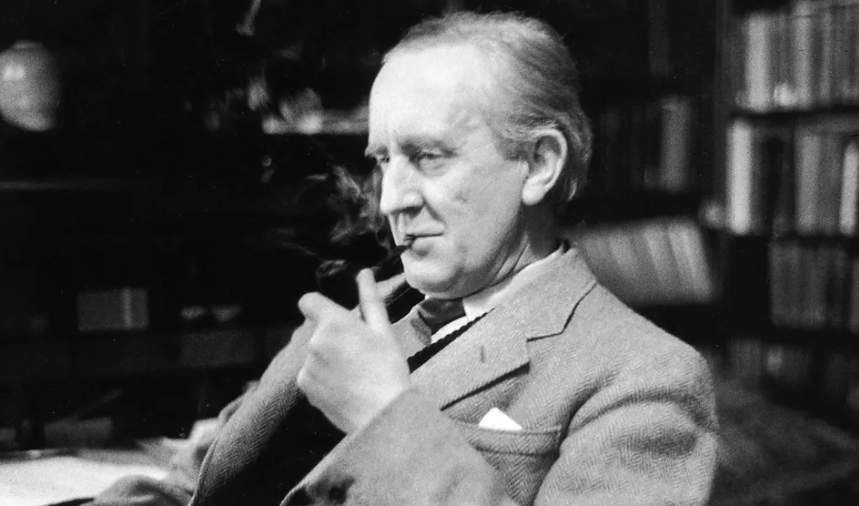
Extracts from JRR Tolkien's last recorded interview were broadcast by the BBC in 1968, more than three decades after *The Hobbit *was published, but the full recording was only rediscovered in the broadcaster's archive in 2019, Fionna Macdonald writes for the BBC.
In the footage, Tolkien suggested he would have made a poor match for his own creation, Bilbo Baggins, saying that if a wizard had turned up at his door as a boy he would have found an excuse to avoid the resulting adventure, having been “very well brought up to avoid conversations with dubious old gentlemen”.
The admission was never broadcast in 1968; most of the interview remained in storage until it was unearthed for a radio programme decades later.
Tolkien traced elements of The Hobbit to a hiking trip through the Swiss mountains in 1911, when he was 19, recalling narrow escapes and extraordinary places to sleep that fed directly into Bilbo's journey – “we met no goblin”, he added.
He also discussed his invented languages, describing how a wartime and university-era fascination with Finnish, alongside a smattering of Greek and other languages, shaped the foundations of Middle-earth's tongues, a hobby he said left his Greek drama essays “getting worse and worse”.
After the First World War, he worked briefly on the Oxford English Dictionary, an experience that introduced him to Algonquian languages of eastern North America through the etymology of the word “wampum”.
Perhaps the most striking passage concerned Gollum.
Tolkien called the character “an example of corruption”, and became animated discussing the moment in The Lord of the Rings when Gollum begins to revert to his earlier, gentler self, Sméagol, only for Frodo's companion Sam to intervene and unwittingly extinguish that repentance.
Tolkien described this as the most tragic point in the whole story – the “terrible irony that good often does evil” – reflecting a wider view, articulated by Oxford English professor Stuart Lee in a 2019 radio programme on the recording, that in Tolkien's mythology good can sometimes cause harm unintentionally.
Tolkien resisted the suggestion that his books drew simple lines between good and evil, saying that, in practice, it “isn't just goodies against baddies”.