 View notices
McDonagh’s CIA caper lands between In Bruges and Banshees
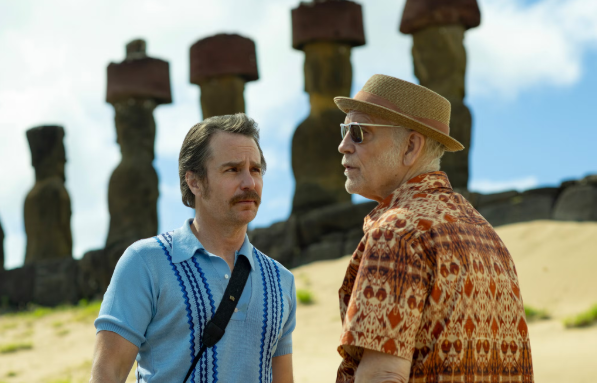
Set in Chile weeks before the 1973 coup, Wild Horse Nine is a mature and confident film, though not quite on a par with director-screenwriter Martin McDonagh’s best work.
John Malkovich, however, has been singled out as its main strength.
David Fear, writing for Rolling Stone, said Wild Horse Nine follows the template of McDonagh’s other films, with an exotic setting, a prickly father-and-son-style bond and richly profane dialogue. He placed it between the director’s debut, In Bruges (2008), and The Banshees of Inisherin (2022): a notch above the former, but short of the masterpiece that the latter was, in his view.
Malkovich plays Chris Carlisle, a veteran CIA operative with a reputation for dirty tricks, who has been sent to Santiago in August 1973 for a last job helping to prepare the ground for the coup. He is dying of cancer and losing his memory, and wants to see the great stone heads of Easter Island before he goes. His partner, Lee Chesterfield (Sam Rockwell), agrees to take him.
The trip is complicated by Chris’s decision to write his memoirs, which cover a career of toppling governments and assassinations, including the one in Dallas. That alarms their superior, MJ (Steve Buscemi), who wants Lee to silence his friend. Parker Posey plays Lee’s wife, and Mariana di Girolamo and Ailín Salas play two Chilean students who cross the pair’s path, with Di Girolamo acting as the film’s conscience.
Fear writes that McDonagh’s taste for gallows humour and rude dialogue will not please everyone. He credited the film’s mix of buddy comedy and conspiracy thriller to the director’s ear for rapid-fire banter and his easy rapport with his actors.
Rockwell, in what Fear counts as his fourth collaboration with McDonagh if stage work is included, is cast against type as the voice of reason but still seems unpredictable.
The film, he said, is carried by Malkovich, whose character is by turns cantankerous, childlike and forgetful, and haunted by guilt, so that it is unclear whether illness, an agency bullet or remorse will finish him.
Fear picks out a phone call between Chris and his estranged brother, played by Tom Waits in Monument Valley, in which the brother says the country went wrong after Kennedy’s killing and Chris replies that it was already rotten and people simply had not noticed.
He also noted a tender scene in which a horse seems to sense Chris’s cancer.
Fear describes the film as both funny and angry, with the jokes holding back the director’s fury. Beneath the bromance, he said, lies a verdict on the paranoid streak in American politics, and a demand that memories of the country’s support for anti-democratic coups not be erased.
Guilt and regret, he suggests, are the only sane responses to such a violent history.
Sources: Rolling Stone.