 View notices
Global chip sell-off deepens as investors brace for Nvidia's earnings test
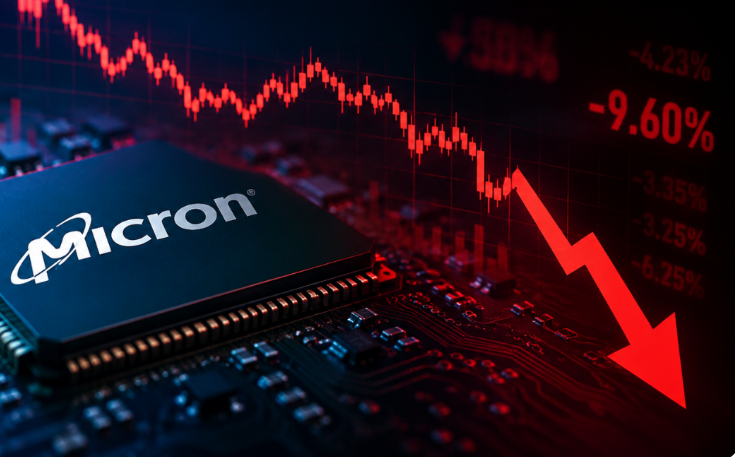
Semiconductor stocks are experiencing a sharp, global risk-off sell-off, led by memory and AI-chip names, as investors turn cautious ahead of Nvidia's earnings release and question whether AI infrastructure spending and chip valuations can keep climbing at their recent pace.
What is moving
The Philadelphia Semiconductor Index fell 2.70% in the latest US session, while the Nasdaq dropped 0.76%. Nvidia declined 2.91% to $208.48, and Micron fell 5.83%, with SK Hynix's US-listed shares down 4.92%. Semiconductor-focused exchange-traded funds also weakened, with the SOXX ETF falling 2.67% and the memory-focused DRAM ETF losing 5.89%.
The rout spread through Asian markets on Tuesday. Samsung and SK Hynix both slipped roughly 3-5%, dragging South Korea's KOSPI index down by more than 3%. Japanese chip-equipment makers, including Advantest and Tokyo Electron, also came under pressure as investors trimmed exposure to the broader AI trade.
Why investors are selling
Four factors appear to be driving the pullback. Firstly, Nvidia's upcoming results and outlook are being treated as a major test of whether AI spending remains robust enough to justify current chip valuations. Secondly, reports that Nvidia has raised AI-chip prices in response to higher memory costs have drawn attention to tight and increasingly expensive memory supply, particularly high-bandwidth memory used in AI systems.
Thirdly, there is growing unease over whether the enormous capital expenditure by cloud companies will eventually translate into sufficient revenue and profit, prompting selling in chip suppliers even as some of the firms buying AI hardware have held up comparatively well. Finally, Monday's US session showed a rotation away from high-beta technology names towards defensives and financials – the Dow rose 0.26% even as the Nasdaq and semiconductor shares fell.
The key distinction
At this stage, the sell-off looks more like a valuation and positioning correction than a sign of collapsing chip demand. The sector's longer-term fundamentals – AI data centres, advanced memory, networking and semiconductor equipment – remain intact, but expectations had climbed very high.
Nvidia's guidance, memory pricing trends and commentary from major customers are likely to determine whether this proves a temporary shakeout or the beginning of a deeper reassessment of chip valuations.
For South African investors, the main transmission channels are the Nasdaq, the rand/dollar exchange rate and global technology ETFs, rather than local semiconductor shares directly. The next major catalyst for the sector is Nvidia's earnings report, due after Wednesday's close, and in particular its forward-looking guidance.
- SOURCES: HDFC Sky, FN News, The Tribune, The Economic Times, Moneycontrol, The Motley Fool.