 View notices
Can artificial intelligence make museums more human?
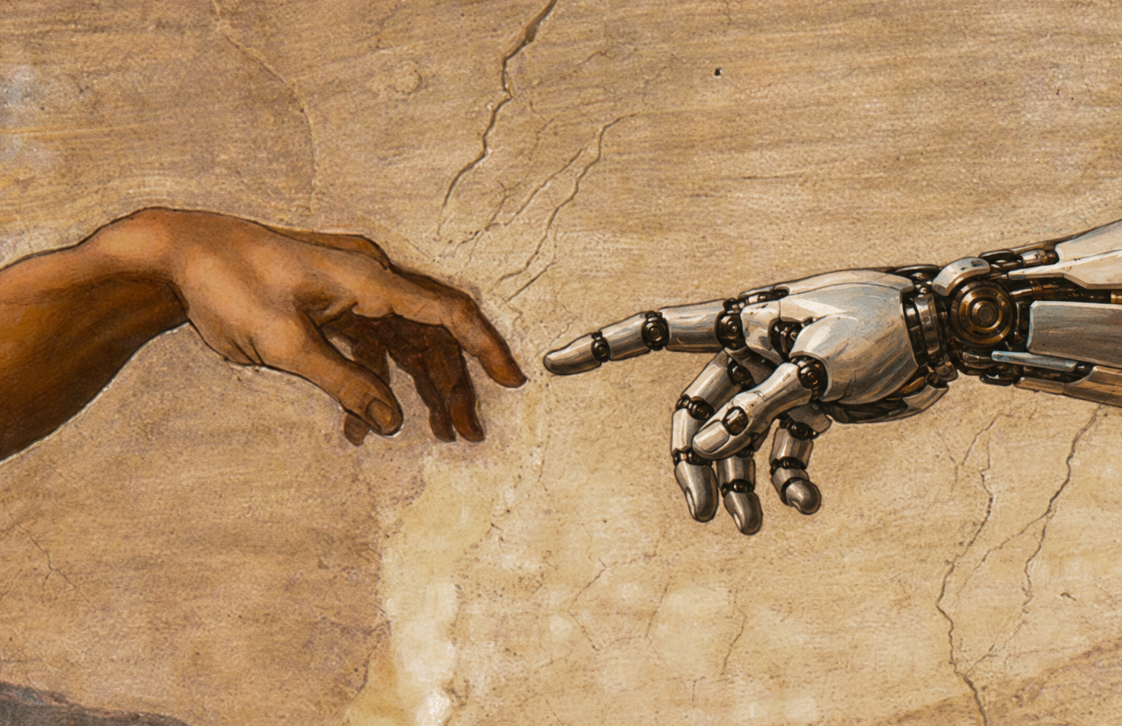
Artificial intelligence is increasingly being promoted as a way of making museums more accessible, efficient and relevant, but researchers warn that the rush to embrace the technology could undermine the very human experiences these institutions are intended to preserve.
A new report by American museum think tank Remuseum, titled “Five Ways AI Can Humanise Museums”, examines how major art institutions are incorporating AI into their operations, from communicating with visitors to managing collections and developing fundraising programmes.
The report's cover reimagines Michelangelo's famous Creation of Adam on the ceiling of the Sistine Chapel, replacing the hand of God with that of a robot.
The imagery raises a fundamental question: whether AI is becoming a tool that empowers human creativity or a technology increasingly entrusted with activities traditionally dependent on human judgement.
Writing for The Conversation, Sarah Cook, professor of museum studies at the University of Glasgow, examines the report's findings and questions whether technological innovation necessarily improves the relationship between museums and their audiences.
Remuseum's founding director, Stephen Reily, draws on case studies involving seven major American art museums to illustrate how AI can assist institutions with marketing, fundraising, collection management, staff training and visitor engagement.
The report suggests that museums should regard AI adoption as an unavoidable part of their development.
However, Cook argues that reluctance among museum professionals may reflect legitimate concerns about employment, intellectual property, cultural preservation and the commercial use of visitor information rather than simple resistance to change.
The possibility of job losses is particularly contentious.
Although AI could reduce administrative burdens and improve access to museum collections, its introduction also raises questions about whether institutions will replace specialised staff with automated systems.
Cook points to the importance of artists who use technology not merely to produce artworks but to challenge society's understanding of technological change.
One example is British artist Alexandra Daisy Ginsberg's “Machine Auguries”, an installation exhibited at the Toledo Museum of Art in 2023.
The work uses artificial intelligence, sound and light to recreate a dawn chorus of birdsong, encouraging visitors to reflect on the relationship between nature, human activity and technology.
Such installations demonstrate how museums can provide spaces in which the public critically examines AI rather than simply experiences its practical applications.
The debate also extends to ownership of cultural material.
Museums hold extensive collections of artworks, historical records, photographs and other materials that could become valuable resources for training AI systems.
Their use raises questions about copyright, consent, commercial exploitation and whether institutions should allow private technology companies access to cultural assets held for the public benefit.
Visitor privacy presents another challenge, particularly where AI systems analyse personal information to deliver tailored experiences.
Cook argues that museums should consider who benefits from AI adoption and whether the technology genuinely improves public engagement before committing to its widespread use.
The central issue is not whether museums can use artificial intelligence, but whether doing so strengthens their cultural and educational responsibilities.
As AI becomes increasingly embedded in creative industries, museums may have an important role in helping society understand the technology's implications, rather than merely becoming another sector transformed by automation.
Sources: The Conversation, Sarah Cook, University of Glasgow, 14 October 2026; Stuff South Africa, 15 October 2026; Remuseum, Five Ways AI Can Humanise Museums.