 View notices
America’s last scrimshanders face extinction as ivory supplies run dry
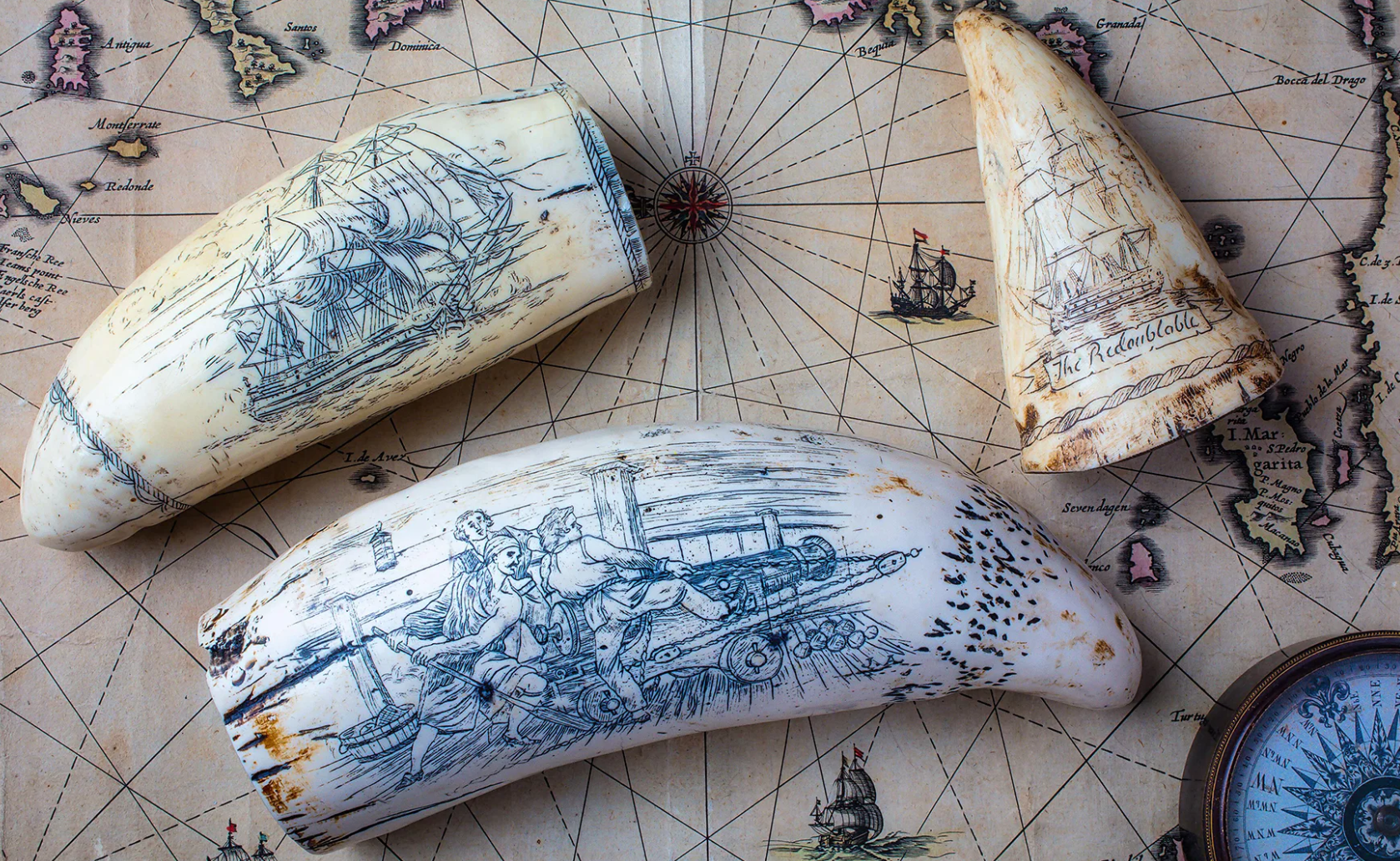
As Moby Dick turns 175, some of the last practising American scrimshanders are grappling with the future of one of the country's oldest art forms, amid a dwindling and largely illegal supply of the whale ivory the craft depends on, Jen Rose Smith writes for the BBC.
Jade Gotauco grew up around the whale skeletons kept by her father, Chet Gotauco, a scrimshander who etched images onto hunted-whale ivory; she is now an artist herself, engraving whale teeth with nautical scenes from her studio in New Bedford, Massachusetts.
While Herman Melville's novel is often cited as the defining cultural artefact of American whaling, scrimshaw – the practice of carving whale teeth and bone, developed by sailors during the industry's 19th-century boom – offers what Marina Wells, assistant curator at the New Bedford Whaling Museum, describes as a more direct, insider's view of the trade, depicting both the danger of the hunt and its intimacy with the hunted animals.
New Bedford became, for a few decades, North America's wealthiest city per capita on the back of whaling, a history the city's Seamen's Bethel church still commemorates through marble cenotaphs to sailors lost at sea. By 1857 more than 10,000 men worked aboard New Bedford whaleships – half the city's population at the time – but the industry collapsed rapidly after petroleum was discovered in Pennsylvania in 1859, flooding markets with cheaper kerosene and effectively ending American whaling by the turn of the century.
Scrimshaw persisted because the whaling boom had left a large surplus of teeth and bone with little commercial value at the time, which scrimshanders such as Nantucket's Michael Vienneau recall buying cheaply from barrels at the wharves as teenagers in the mid-20th century, during a folk-craft revival that included collector John F. Kennedy among its enthusiasts.
The 1973 Endangered Species Act tightly restricted the sale of marine ivory, meaning scrimshanders today must work from a shrinking, pre-1973 supply; Vienneau said a raw tooth can now cost several thousand dollars. Some artists have experimented with alternative materials, including cow bone, deer antler and, in Vienneau's case, a 30,000-year-old mammoth tusk dug out of Alaskan permafrost, though purists such as Gotauco maintain that only carvings on genuine whaling-era ivory count as true scrimshaw.
Gotauco works exclusively with pre-1973 ivory and bone inherited from her grandmother, who emigrated to Boston from a Newfoundland family of seal hunters, cod fishermen and whalers with Mi'kmaq roots.
She has described grappling with the ethics of working with materials taken through what she regards as an environmentally destructive and dangerous industry, but has come to see the craft as a way of honouring both the whales and the whalers who died pursuing them. She expects the art form to fade within her lifetime as the remaining supply of legal ivory is exhausted. “When I run out of teeth along with everyone else, I'll raise a cup to the story's end,” she said. “May we never get more.”