 View notices
AI video tools gut China's booming “microdrama” industry, putting actors and crews out of work
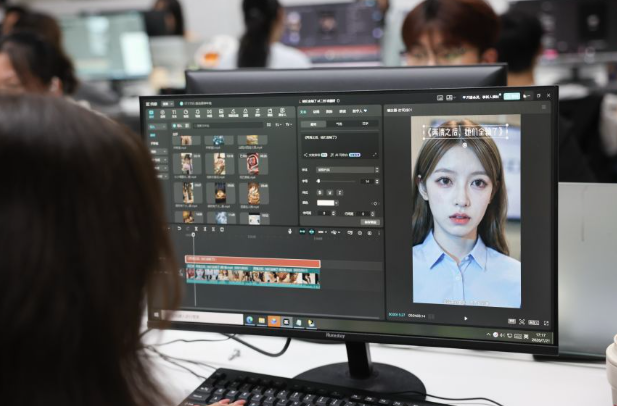
China's fast-growing microdrama industry – short, vertical dramas designed for mobile viewing – is being upended by AI video-generation technology that can produce entire productions at a fraction of the cost of live-action filming, wiping out jobs across the sector.
In Hengdian, the sprawling studio town in Zhejiang province nicknamed “China's Hollywood”, film sets that once buzzed with activity are falling quiet, Simone McCarthy writes for CNN.
More than 120,000 microdramas were released in the first three months of this year, with 95 per cent generated by AI, according to Chinese state media.
Microdramas – broken into roughly 90-second episodes that together form a feature-length plot – first emerged during the pandemic on apps such as Douyin and Kuaishou. The domestic industry was valued at nearly $15 billion last year, according to market research firm DataEye, almost double the size of the country's box-office film market, and had drawn thousands of young actors and crew to Hengdian and other production hubs. That boom has now reversed.
Actor Junlin, 24, said she had worked only seven days in June, down sharply from filming 25 of around 30 days a month in the spring, and described the shrinking pool of productions as squeezing her chances of survival in the industry.
The shift followed the release of powerful new AI video tools, including ByteDance's SeeDance 2.0, alongside rival technology from Kuaishou, Alibaba and MiniMax. According to one production firm, a 120-minute AI-made project of ordinary quality can be produced by a five-person team in about a week for roughly 15,000 yuan ($2,200) – under a tenth of the typical low-end cost of a live-action shoot. On Douyin alone, 220,000 new AI-generated microdramas drew 500 billion views in the first half of the year, DataEye figures show, with more than half using AI to simulate real people since March.
Actor Zhuang Wenjie, 28, left Hengdian in April after jobs and pay dried up, saying the hardship had ultimately worn her down. Others who stayed described plunging fees, with some offered around 300 yuan ($45) a day for roles that once paid thousands.
Actor Liu Yuzhan, 29, said he had turned to food delivery work to cover his mortgage and support his parents, saying the current microdrama market no longer covered his daily expenses.
The disruption has also created new roles, for AI editors, prompt-writers and screenwriters. Tan Chen, 21, who founded an AI production startup in Jinan in April, said his team adapts scripts and novels for microdramas before generating footage using AI prompts. But he said the field has since become saturated, with rates falling from around 1,000 yuan a minute at the outset to as little as 150 yuan now, and said the sector's rapid growth had inevitably produced a degree of bubble.
The use of AI to generate characters resembling real actors without consent has also become contentious; at least one performer has won court-ordered compensation, according to state media. Actor Yu Shutian said she believed fans had spotted her own likeness blended into an AI character but chose not to pursue legal action, saying she felt AI could not be stopped and that she preferred to find a reasonable way to work with it instead.
New Chinese regulations set to take effect in September will tighten oversight of microdrama content. Meanwhile, industry data suggests audience appetite for live-action "real people" dramas persists, with such productions still ranking among the most-watched content on platforms such as Hongguo.