 View notices
A gunner’s wartime love letters bring a Welsh border town together
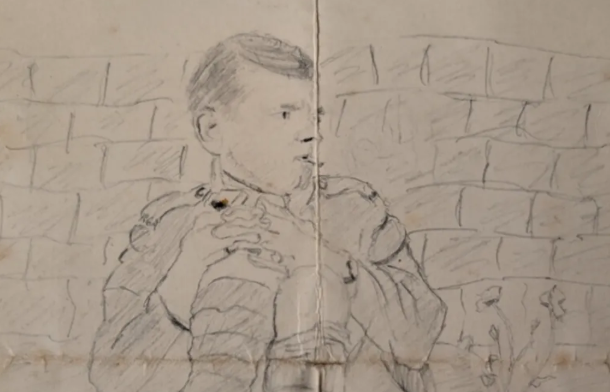
A bundle of 100 love letters from a First World War gunner who never came home has led to a memorial service and bench in a Powys town.
Willie Webber, a gunner with the Royal Garrison Artillery’s 297th Siege Battery, married Gladys at St Edward’s Church in Knighton in December 1917 after returning home injured.
Jayne McCubbin reports for the BBC that he went back to the Western Front soon afterwards and wrote to her regularly until October 1918, sending pressed flowers and addressing her as his darling girl. He signed off as her true husband and loving sweetheart.
His letters were full of plans for the future. He did not see them realised. Just four weeks before the Armistice, he was killed at the age of 25 when his gun backfired. The couple had no children, and with no descendants there was nobody left to tell their story.
The letters resurfaced at an online auction in 2025. Andy Garner, a mechanic from Norwich who collects, transcribes and self-publishes wartime correspondence, kept coming back to them. He won them with a bid of £351.51 placed in the final seconds, though he could barely afford it. Reading the full set, he was struck by the couple’s devotion and by Willie’s conviction that he would make it home.
The seller, Keith Budgen, then did something unexpected. He contacted Andy the next morning and offered to return the money, saying he had been given the letters himself and felt Andy should have them.
The two men agreed that Willie should be remembered in Knighton, where he and Gladys married. Within two and a half weeks, supporters had raised £1,600 for a memorial bench at the church. A remembrance service followed, with a special tribute from the bell-ringers, a volunteer bugler and support from the Royal British Legion.
Ian Ferguson of the Legion said the idea felt right because Willie was named on no cenotaph, either in the town of his birth or in Knighton. The Reverend Rachael Storer praised Andy’s determination and said the story was ultimately about love. Lynn Scales, who wrote a special piece for the bell-ringers, said Willie had seemed destined to be forgotten but no longer was.
It was Andy’s wife, Lex, who wrote to the BBC so that others would hear about his work. She said people tend to rally once the word spreads, and found it beautiful that anyone would take the time to remember two ordinary people.
More than a century on, Willie and Gladys have a new community, formed not through family ties but through two strangers who would not let their story fade.
Source: 'My darling girl, you are everything to me' - auctioned letters reveal WWI love story